
Big Cola Wetlands
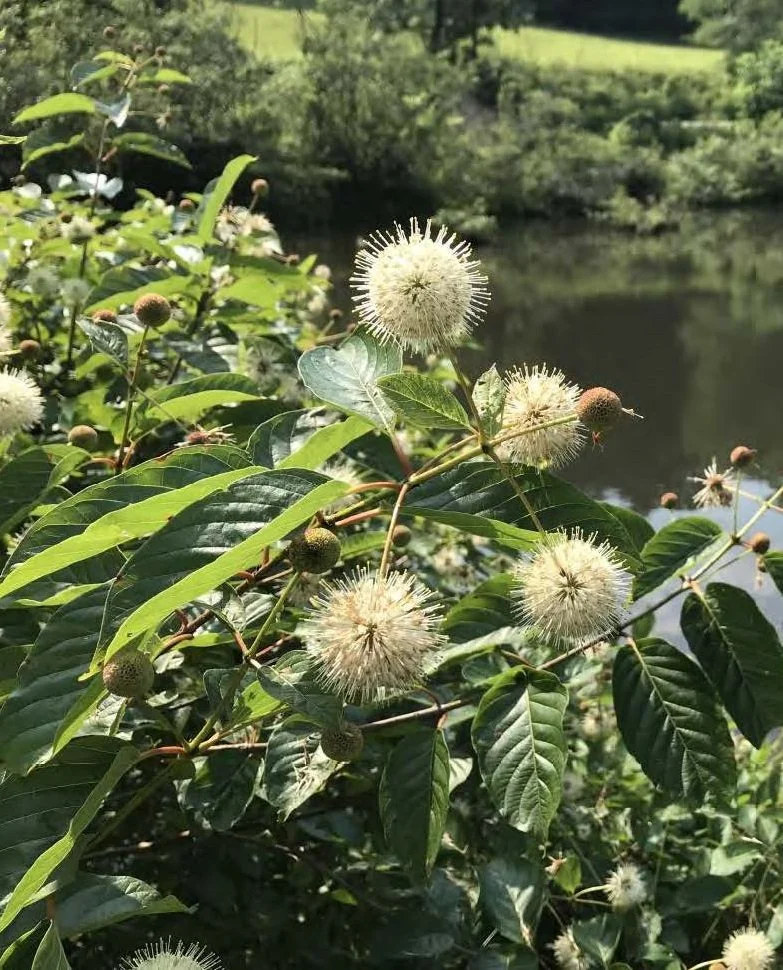
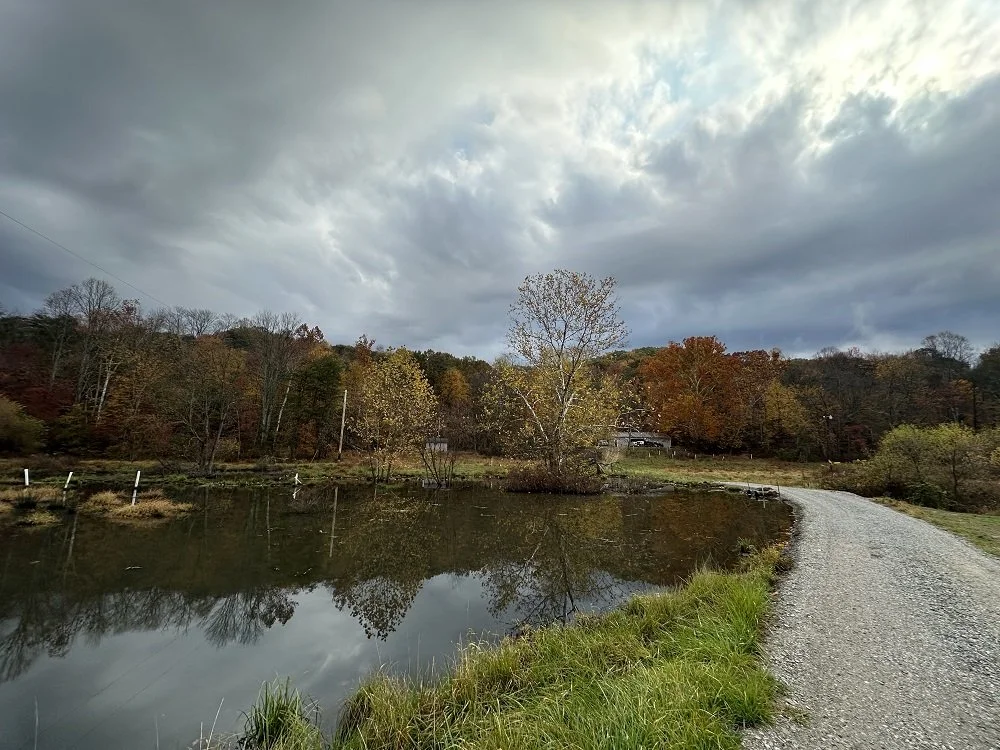
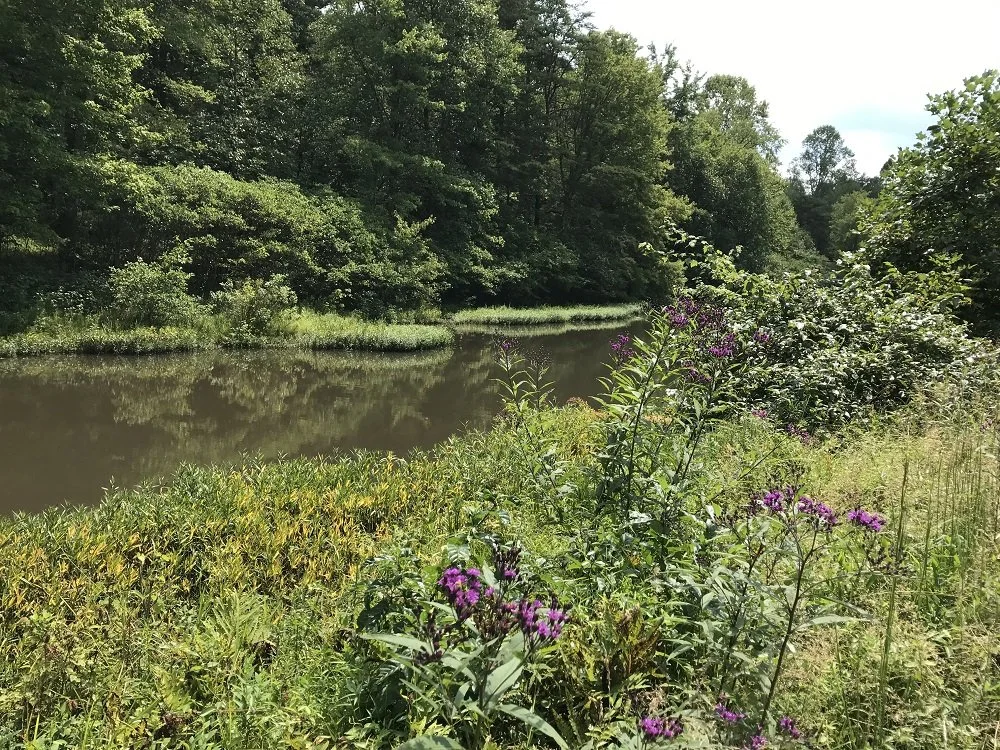
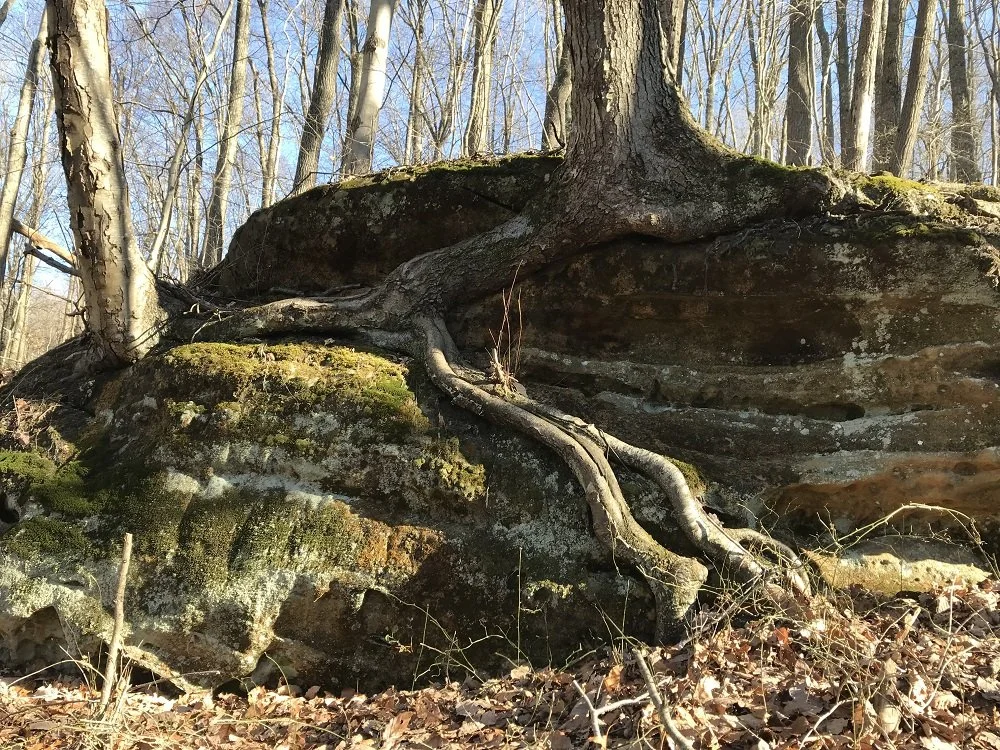
Big Cola. Located in Hocking County, the 60.5-acre Big Cola Wetlands Preserve protects riparian wetlands, ponds, vernal pools, upland pollinator fields, a hardwood forest, sandstone rock outcrops, and a half-mile of Big Cola Creek. Together, this variety of habitats supports a rich diversity of native species, including an abundance of amphibians and breeding and migratory birds.
See all of the Arc’s preservation work to date in Hocking Hills:
click on the Arc’s Hocking Hills Forever campaign
HIKING ACCESS BY PERMIT ONLY - SEE LINK BELOW
Dogs are not permitted at Big Cola Wetlands.
A note on ticks & chiggers
A dog owner's guide to hiking the Arc of Appalachia

Visiting Big Cola Wetlands
Big Cola Wetlands lies near Cantwell Cliffs in Hocking Hills and features one of the region’s most dynamic, native landscapes. Accessing the trail at Big Cola Wetlands is by permit only.
How the Permit System Works. A link to the permit application can be found at the bottom of this webpage. If the vehicle limit has not yet been reached on your requested date and you don’t exceed one application per month, your permit will be approved. The emailed permit package will include a two-page hiking guide with preserve regulations, natural history, trail map, directions, and a passcode to the entrance gate. Please note that the gate will be locked upon your arrival. After you open the lock with the password, be sure to shut and lock the gate behind you - both when you enter and when you depart. Please read the following orientation material before applying for a permit. We are sorry to have to say this, but permit holders who violate Arc regulations will be denied future permits and risk having their car towed. Fortunately, 99.9% of Arc visitors are wonderfully respectful.
Permit Maximum. A maximum of five people are permitted per vehicle, and a total of six cars are permitted each day. Permits for multiple cars are not permitted, and each applicant may only submit one permit request in any one month. This policy will allow more visitors to witness the preserve’s outstanding beauty, which is our highest goal. Big Cola’s trailhead can only hold six vehicles if cars are parked in an organized manner. Please follow the parking directions provided in your permit packet to ensure that all guests with permits can find a parking space when they arrive. If you wish to bring an organized group too large to apply through this system, please inquire with our office staff on how to proceed. Call 937-365-1935 or write to arcpreserveinfo@gmail.com.
Why does Big Cola Wetlands have limited access? This system limits the number of people accessing the preserve each day so that the preserve’s sensitive habitats and botanicals can be protected into the far-flung future, and the limited parking at the preserve is not exceeded by visitation. Unfortunately, many, if not most, of the public lands in Hocking Hills have been worn by the large numbers of visitors who are attracted to the region’s compelling scenery. It only takes a small percentage of visitors straying off-trail to negatively impact the vulnerable plants and animals that live there. We ask that all visitors respectfully follow the trail regulations provided with your permit. It only takes one person to destroy an ecosystem, so we must work together to preserve Ohio’s natural beauty for future generations.
How far in advance can I apply for a permit? Permit applications run in monthly cycles, and each cycle begins anew on the first of the month. You can only apply for a permit in the current calendar month. If you're interested in applying for a permit for a future month, please wait until your desired month arrives to submit your application.
How long do I have to wait to receive my emailed permit? As long as your application is for a date that is still available and you haven’t exceeded one application in that month, you will receive your permit in just minutes.
Is there a fee for a permit? No, permits are free. However, stewarding our preserves and maintaining nearly 100 miles of public trails is an expensive proposition for our nonprofit, the Arc of Appalachia. Because the Arc is not tax-supported, we are entirely dependent on donations to keep Big Cola Wetlands and our other preserves open to the public. We would greatly appreciate your gift of support.
Arc regulations can be summarized as follows: Remain on trails at all times and walk in single file to protect the bulbs of native wildflowers bordering the trail - bulbs that are very vulnerable to soil compaction. Do not disturb, pick, or collect flowers, plants, rocks, or wildlife. Hunting, caving, fishing, trail biking, rock climbing, wading, campfires, and swimming are prohibited. Sorry, dogs are not permitted in this delicate landscape.
Hiking Trail Difficulty – 1-mile loop, Easy.
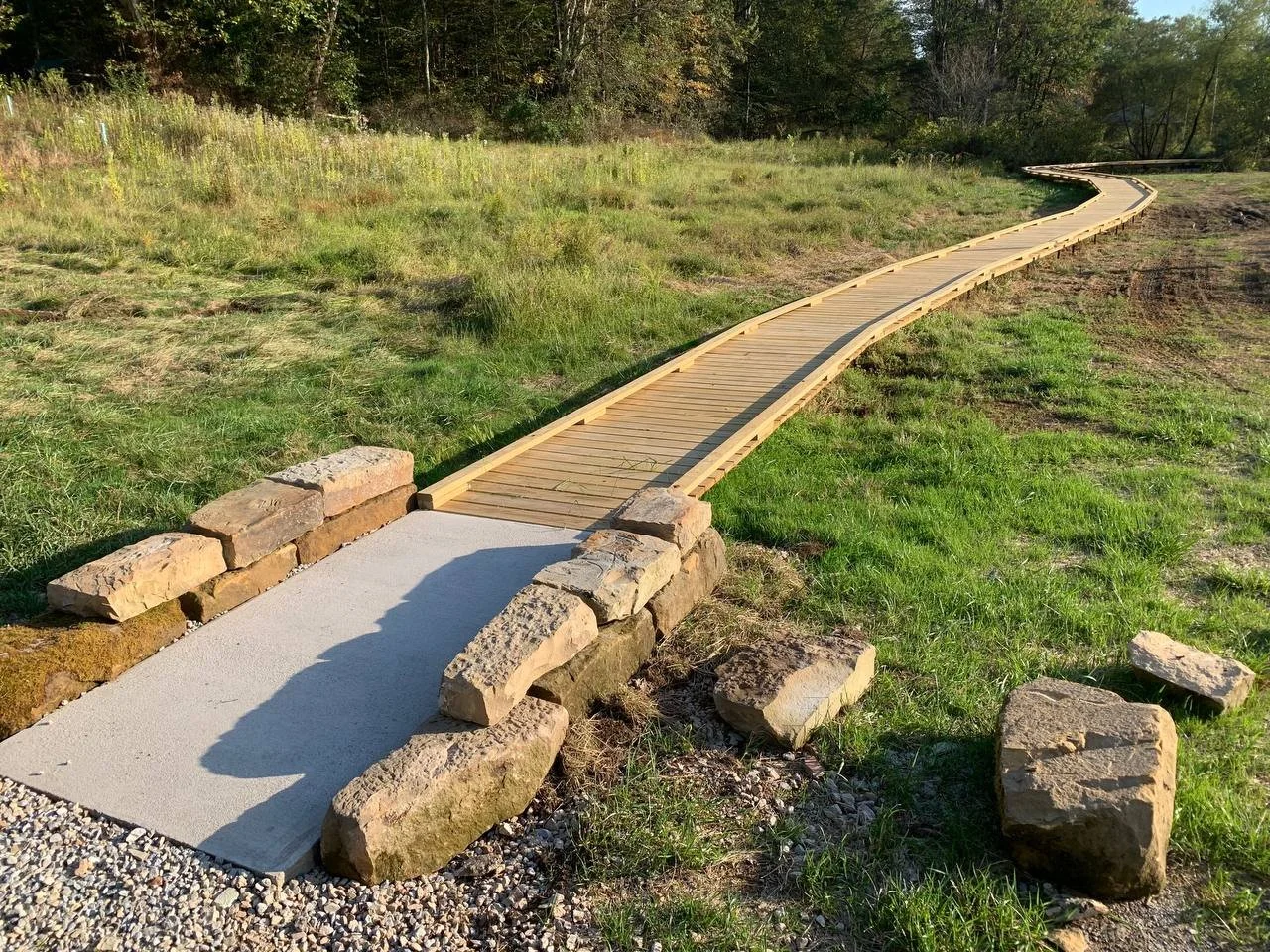
Beaverbrook Trail Description. The Beaverbrook Trail begins by gently meandering above the marsh on a 400-foot ADA-accessible boardwalk, where native wetland plants press close to the planks. It then enters a covered shelter house, where visitors are encouraged to pause and enjoy the sights and sounds of the denizens of the wetlands. From this welcoming vantage point, visitors can watch waterfowl glide gracefully across the open ponds, while butterflies and other lepidopterans drift among the blooming shoreline vegetation.
Between the ponds and Big Cola Stream, the landscape tells a powerful story of renewal. Beaver-driven modifications have reshaped the floodplain, restoring natural wetland hydrology and creating a mosaic of shallow pools, saturated soils, and new habitat for aquatic vegetation. Thanks to the beaver, many new species of amphibians, birds, and aquatic invertebrates now call this place home.
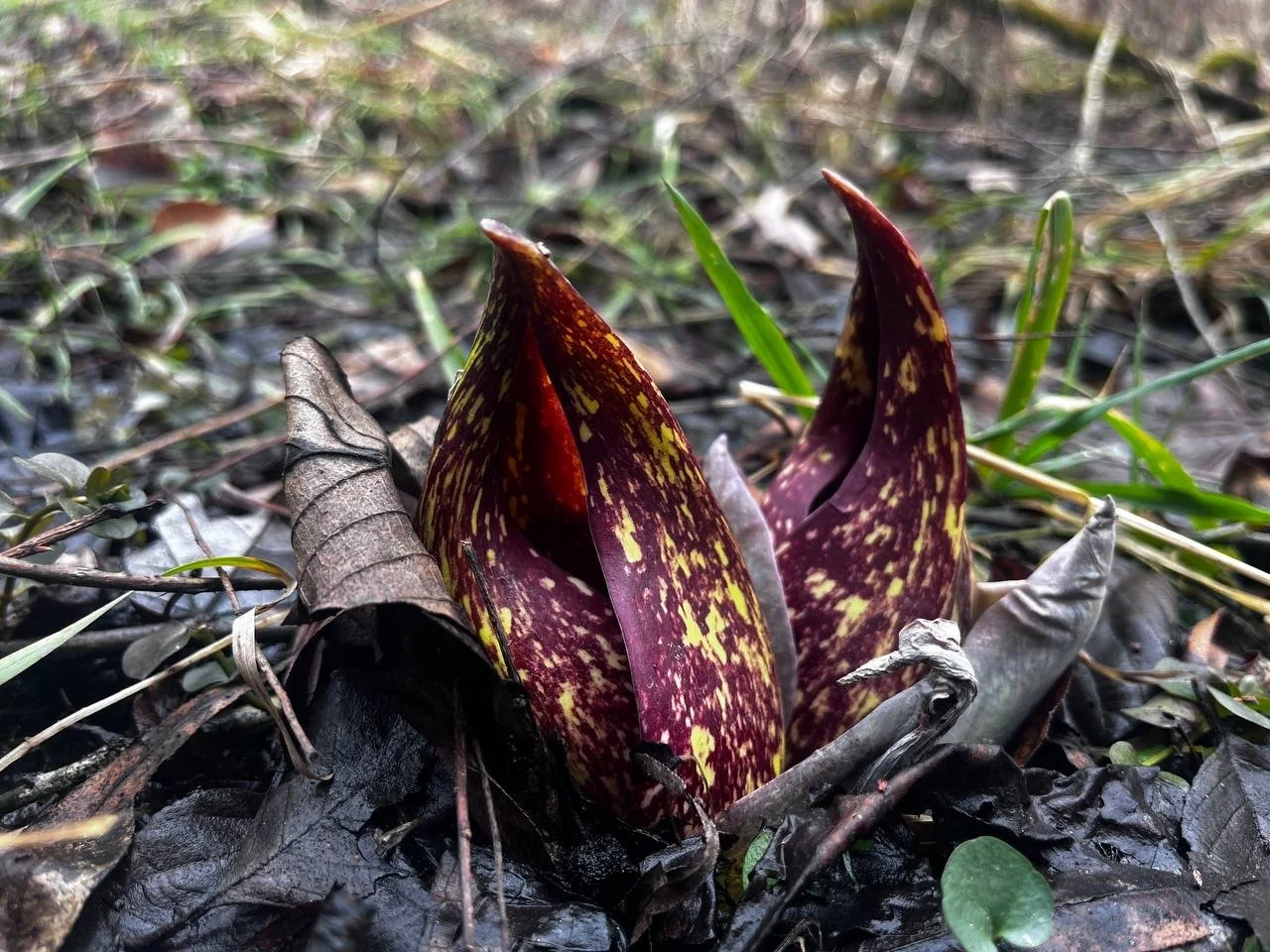
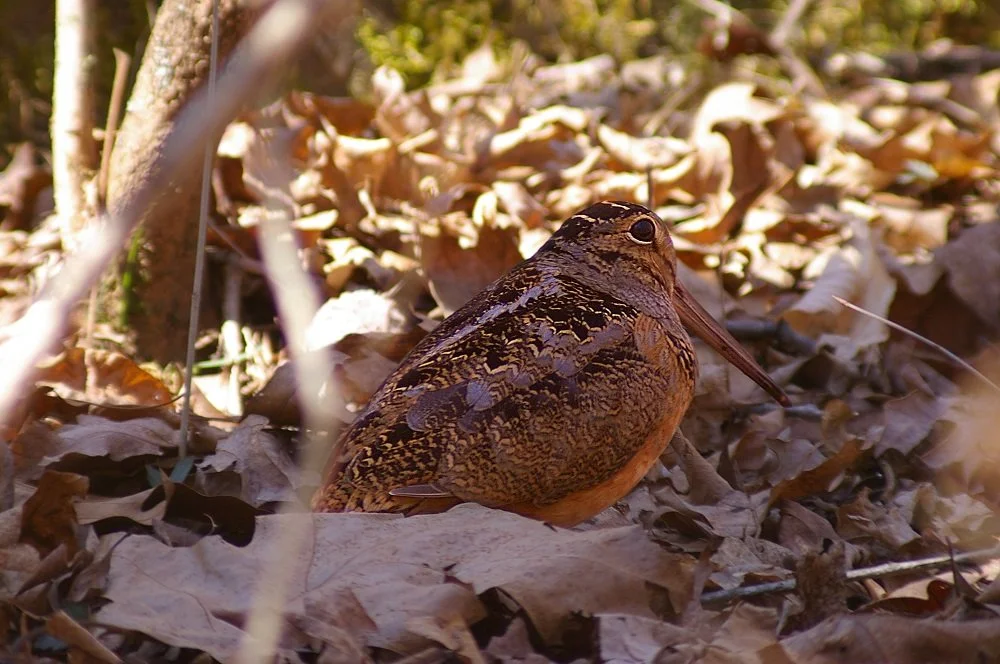
Beyond the wetlands, the forest transitions into a blend of early successional growth and mature canopy, forming an ideal breeding habitat for the American Woodcock. In spring, lucky visitors may hear the distinctive “peent” call echoing at dusk. The upland forest supports other noteworthy species, including mountain laurel, puttyroot orchid, cranefly orchid, and rattlesnake plantain, growing under a diverse canopy of native hardwoods.
Big Cola Wetlands is a place where water, forest, and wildlife converge—an ever-changing landscape shaped by natural forces and alive with seasonal wonder.
A remarkable story of recovery. Quality wetlands, like those found at the Big Cola Preserve, are extremely rare in present-day southeastern Ohio. Once bountiful, most have been drained for agricultural endeavors and development. Big Cola’s wetlands have also been impacted by human activities, but with recent restoration efforts, they are experiencing a remarkable resurgence.
The Arc of Appalachia has been working to restore the wetland hydrology at Big Cola since it acquired the property in 2021. Removing the drainage tiles and diversion ditches has enabled the site’s native wetland communities to begin reestablishing themselves. Hundreds of trees have also been planted in the floodplain, and Arc staff continue to remove invasive species throughout the preserve.
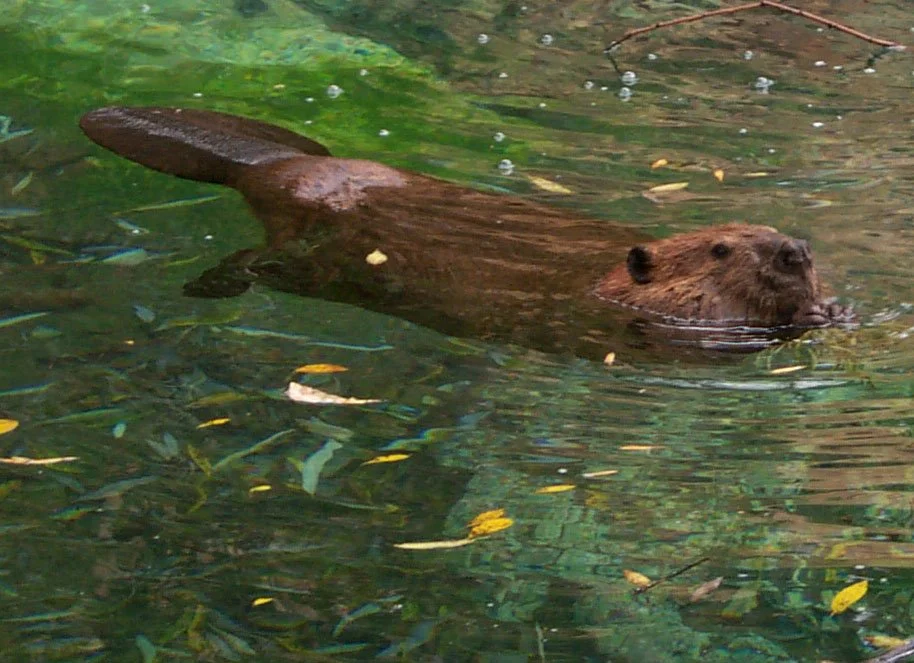
The storyline takes an unexpected turn. In early spring 2024, wetland restoration at Big Cola made an exponential leap forward, aided by nature’s most experienced hydrological engineers, American beavers. They began their own uncontrolled stream modifications, plugging culverts, building dams, inundating tree plantations, and flooding or washing out driveways. The beavers would act, and we reacted. We implemented a project to mollify their uncontrollable urge to raise water levels, and the beavers would find a way to circumvent our best-laid plans. The beavers gave us a front-row seat at a wetland restoration demonstration; we simply needed to observe and adapt.
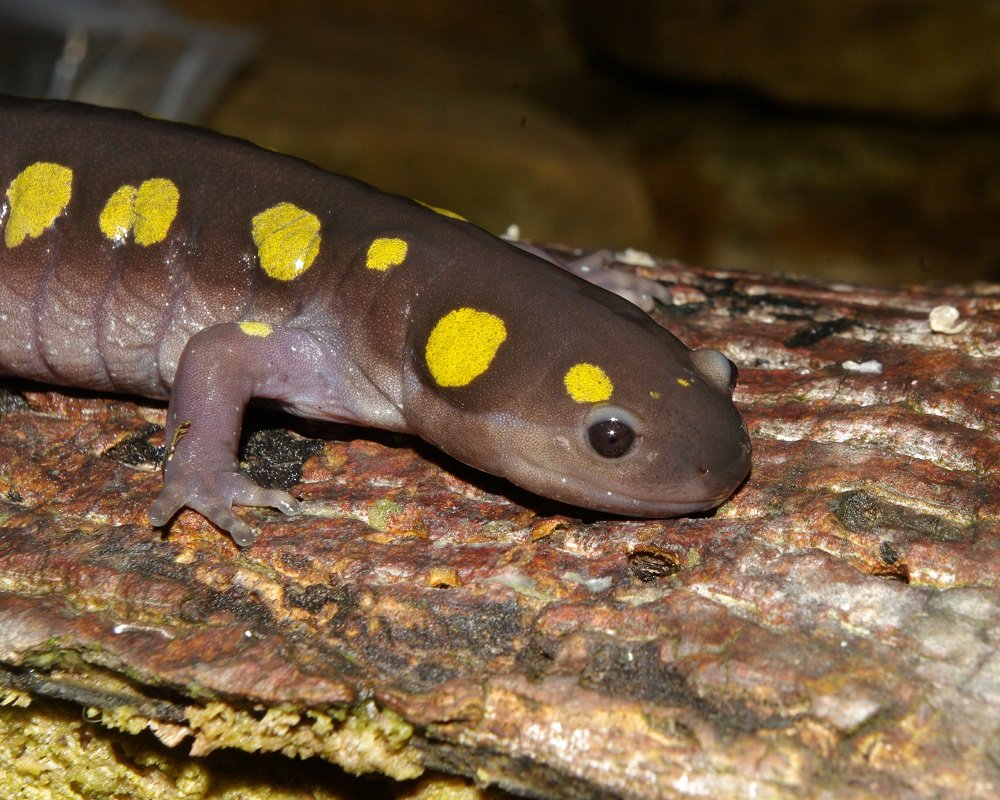
At Big Cola Wetlands, the beavers have transformed the landscape. Beaver dams and deep-water pools break up Big Cola Creek. Wetland vernal pools support wood frogs, spotted salamanders, red-spotted newts, American toads, and spring peepers. In turn, these amphibians and associated insects attract bird life from spotted sandpipers to belted kingfishers, green herons to American bald eagles, woodcock to osprey. And don’t forget to watch for turtles taking a sunbath on logs and along the shore. Visit Big Cola at the right time of day, and you may spy a red fox, mink, coyote, bobcat, or the engineers themselves, the American beavers.
Ecosystem engineers with 7.5 million years of experience. American beavers are an invaluable keystone species. Their network of dams raises the water table, improving drought tolerance. Their wetlands slow, disperse, and store flash flood waters, reducing downstream impacts. Wetlands are natural filters that mitigate excessive sedimentation, recycle fertilizer and chemical runoff, and store up to ten times more carbon than the same stream without beavers. We consider ourselves lucky to have these hard-working “volunteers” call Big Cola Wetlands Preserve their home.
Big Cola is a team effort! Beyond the beavers, we are grateful for our government and community partners that enabled this publicly accessible nature preserve. The Arc was successfully awarded two Clean Ohio grants to help fund the acquisition of this property, as well as trail development, wetland restoration, and non-native invasive plant removal. Additional funding from the Hocking Hills Tourism Association helped fund additional visitor services developments, including the preserve’s ADA-accessible boardwalk and parking area. And dedicated donor support poured driveways, purchased gravel, funded daily operations, and more.