
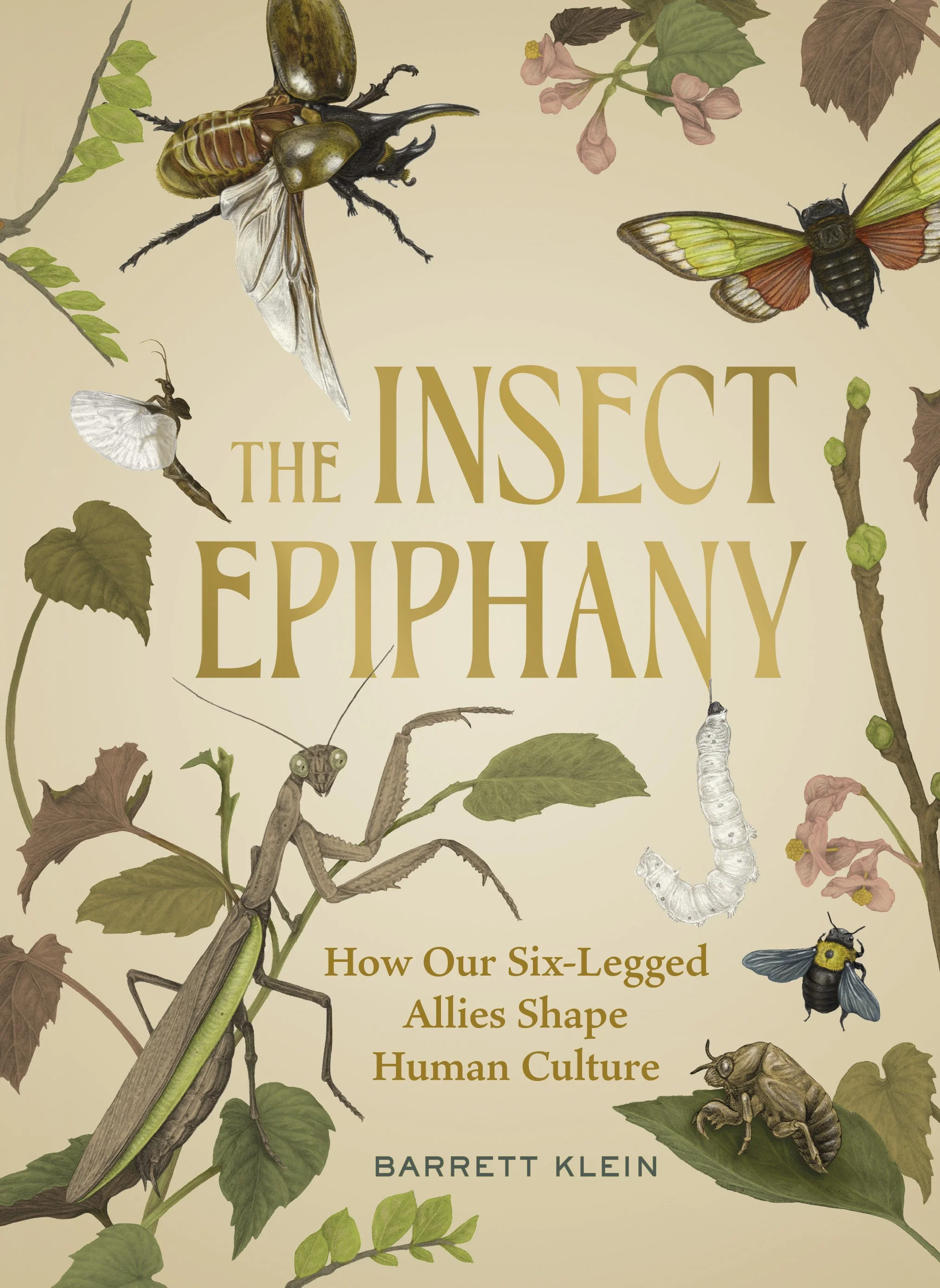
Insect Epiphany
How Our Six-Legged Allies Shape Human Culture
June 12-14. 2026
Course Leader: Dr. Barrett Klein
$325/person
This course is limited to 20 people to ensure
personalized instruction.
Scroll below the Gallery for Deeper Information
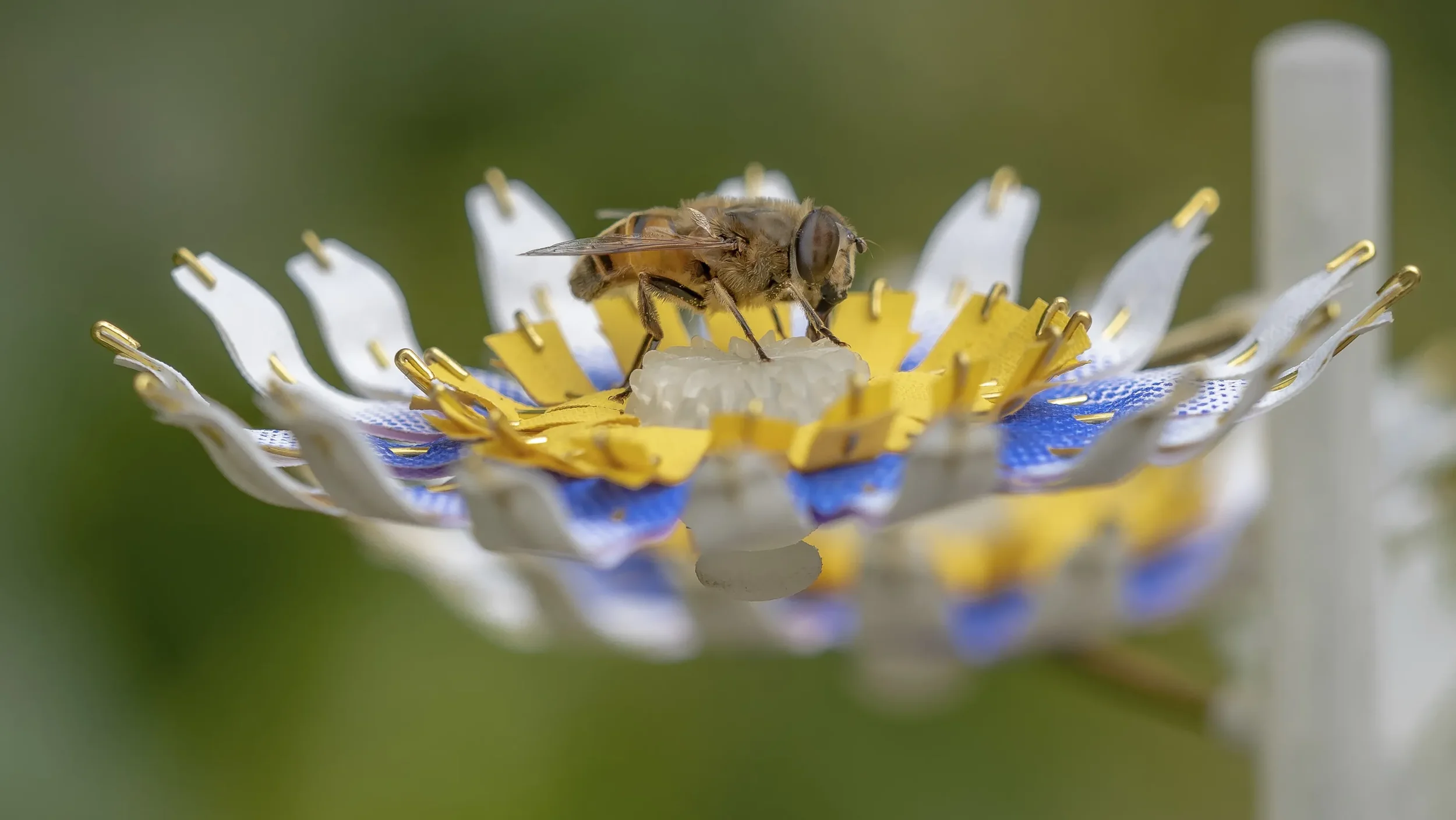
Hoverfly feeding from an artificial flower that turns rain into sugar water and holds no pollen, highlighting the plight of urban pollinators, supplying the insects with food when natural resources wane.
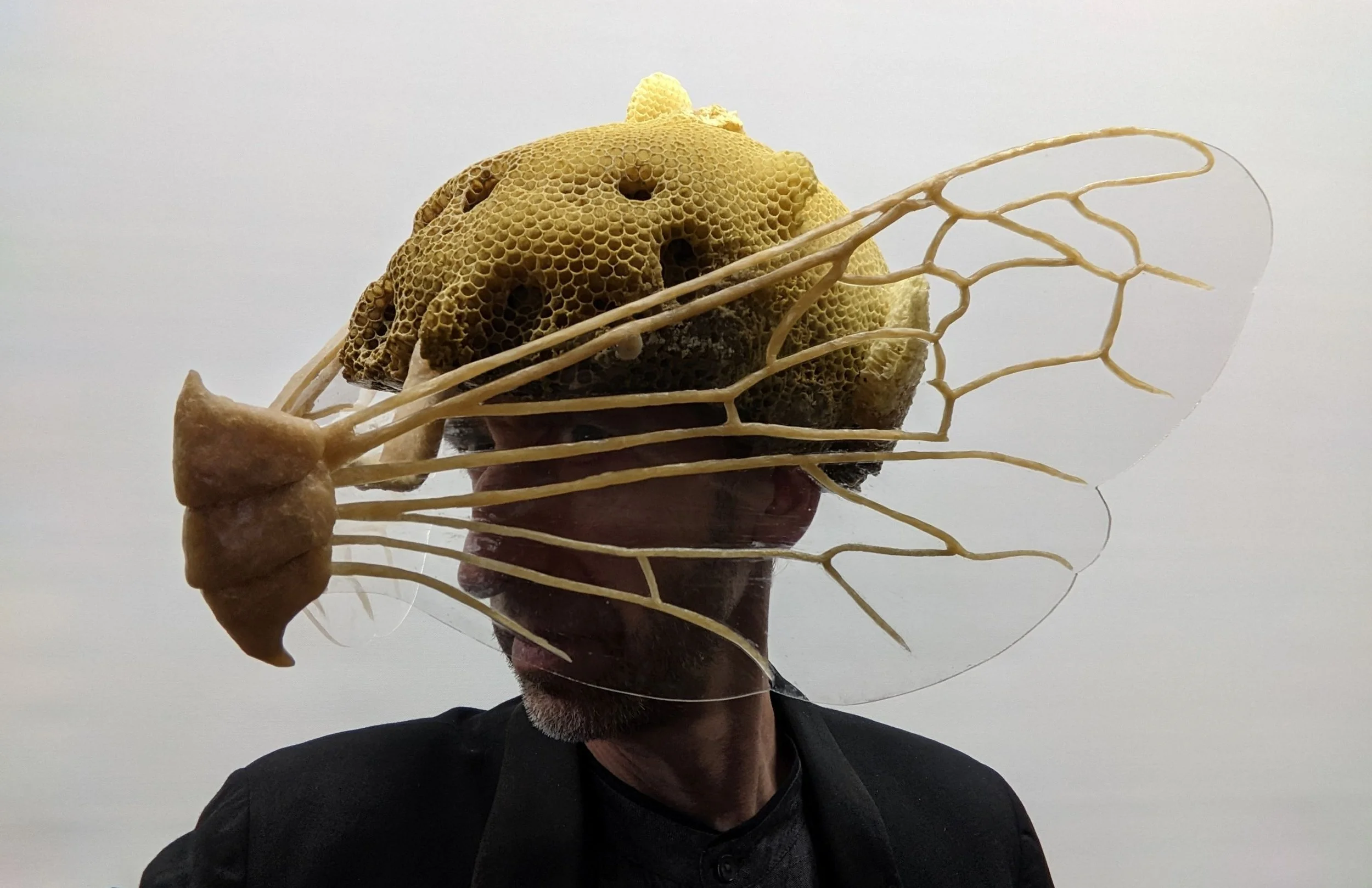
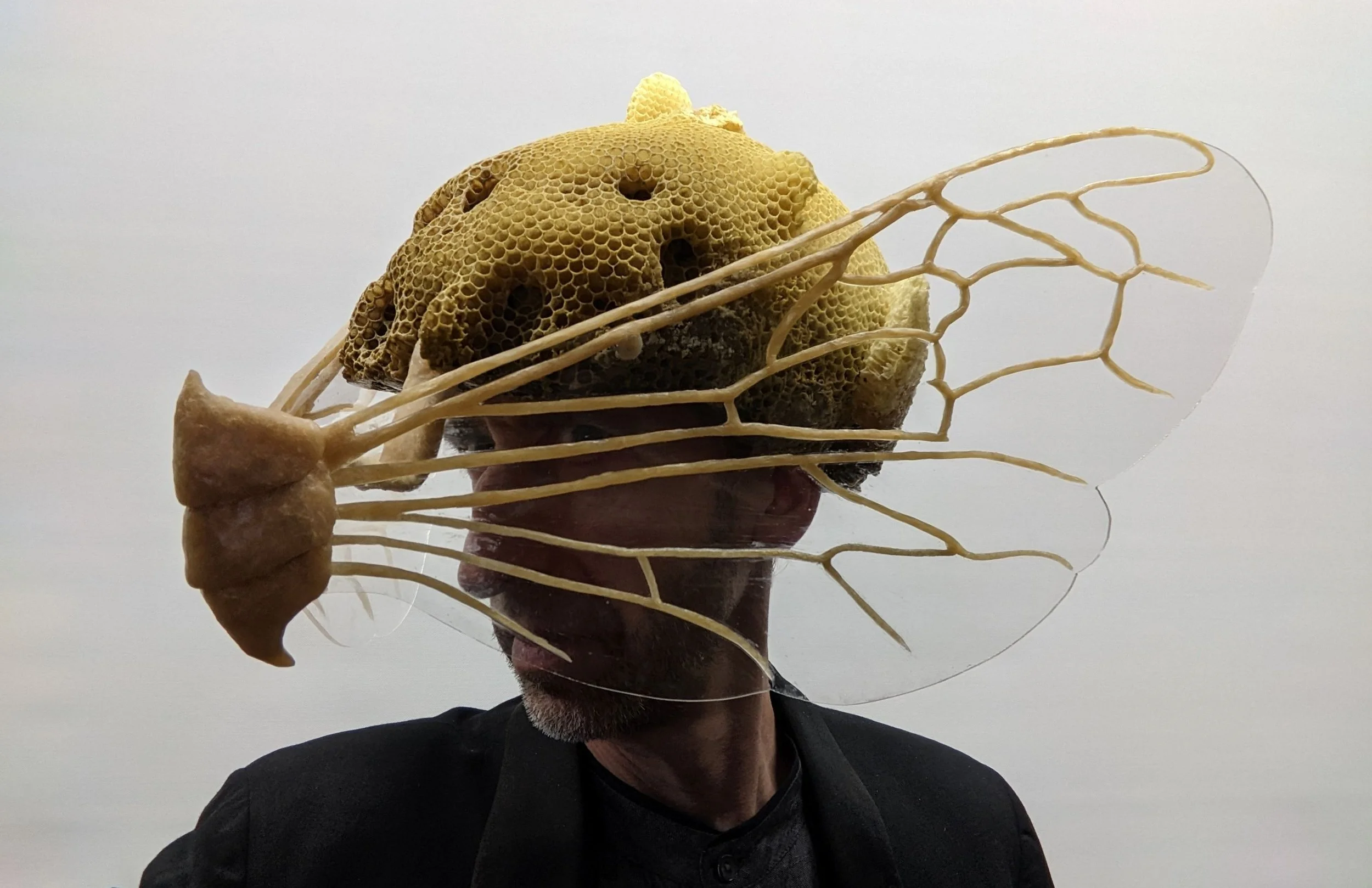
A "hive helmet" by Barrett Klein

Artwork by Elizabeth Jean Younce
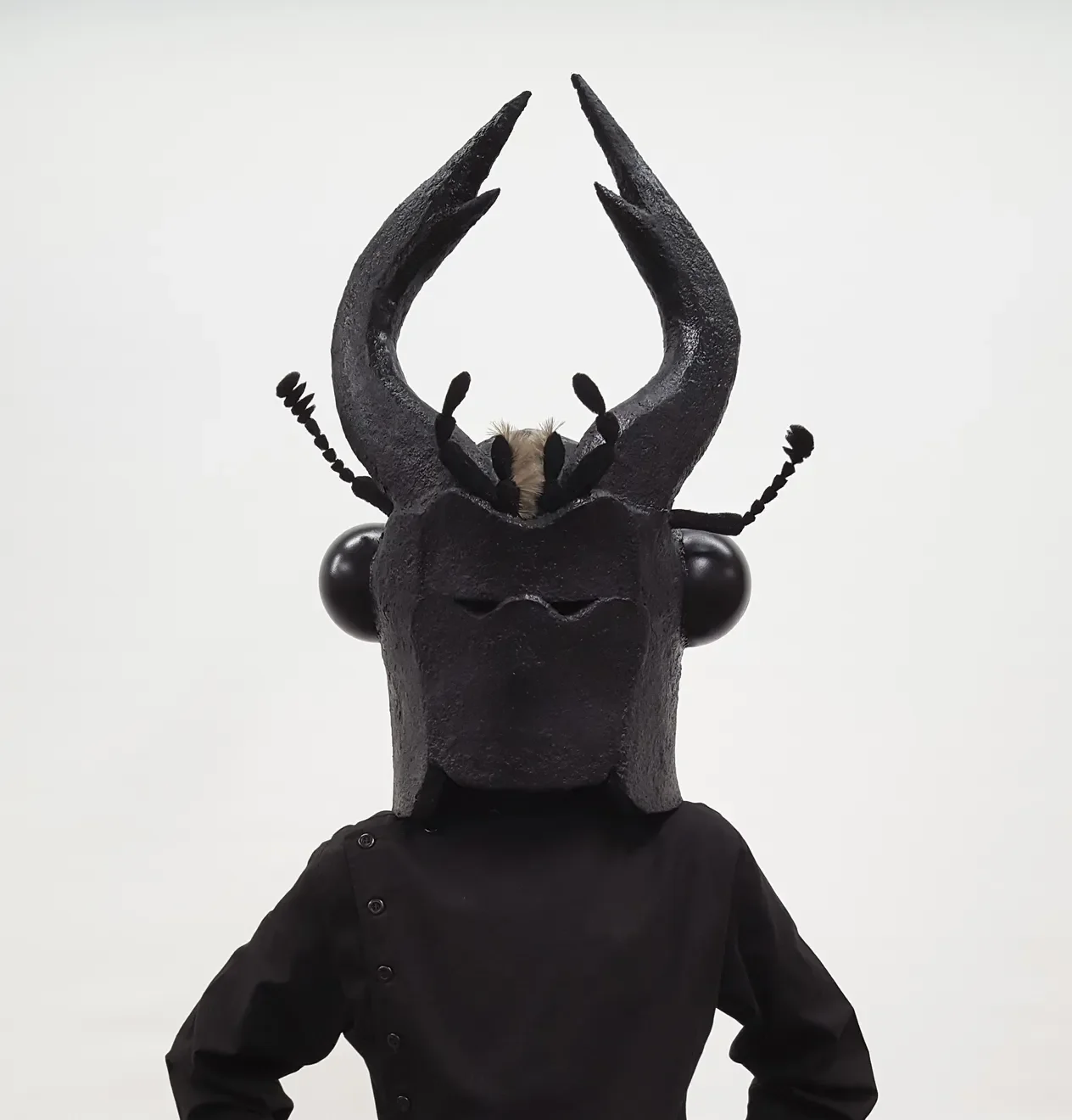
Costume by Barrett Klein
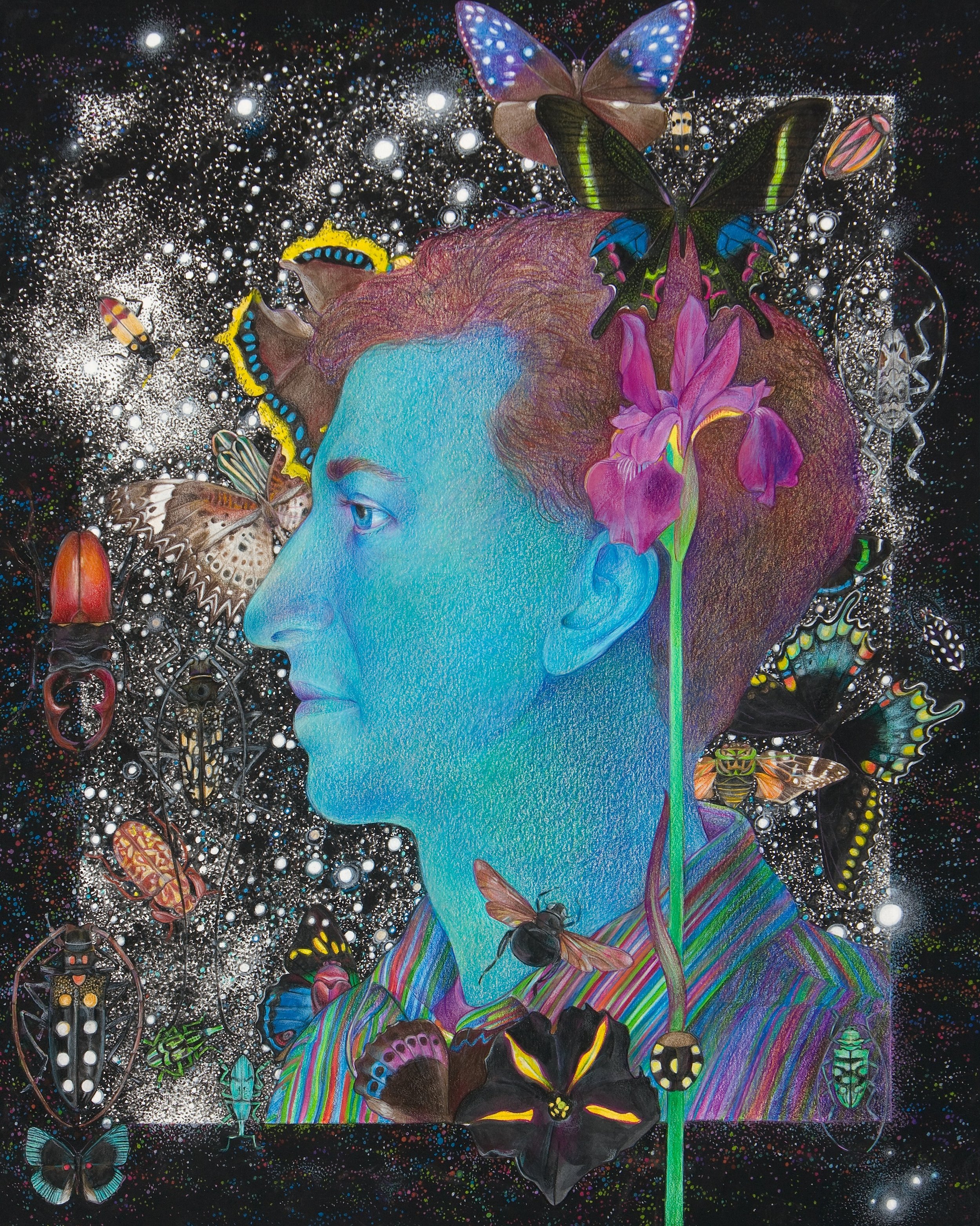
Artwork by Karen Anne Klein
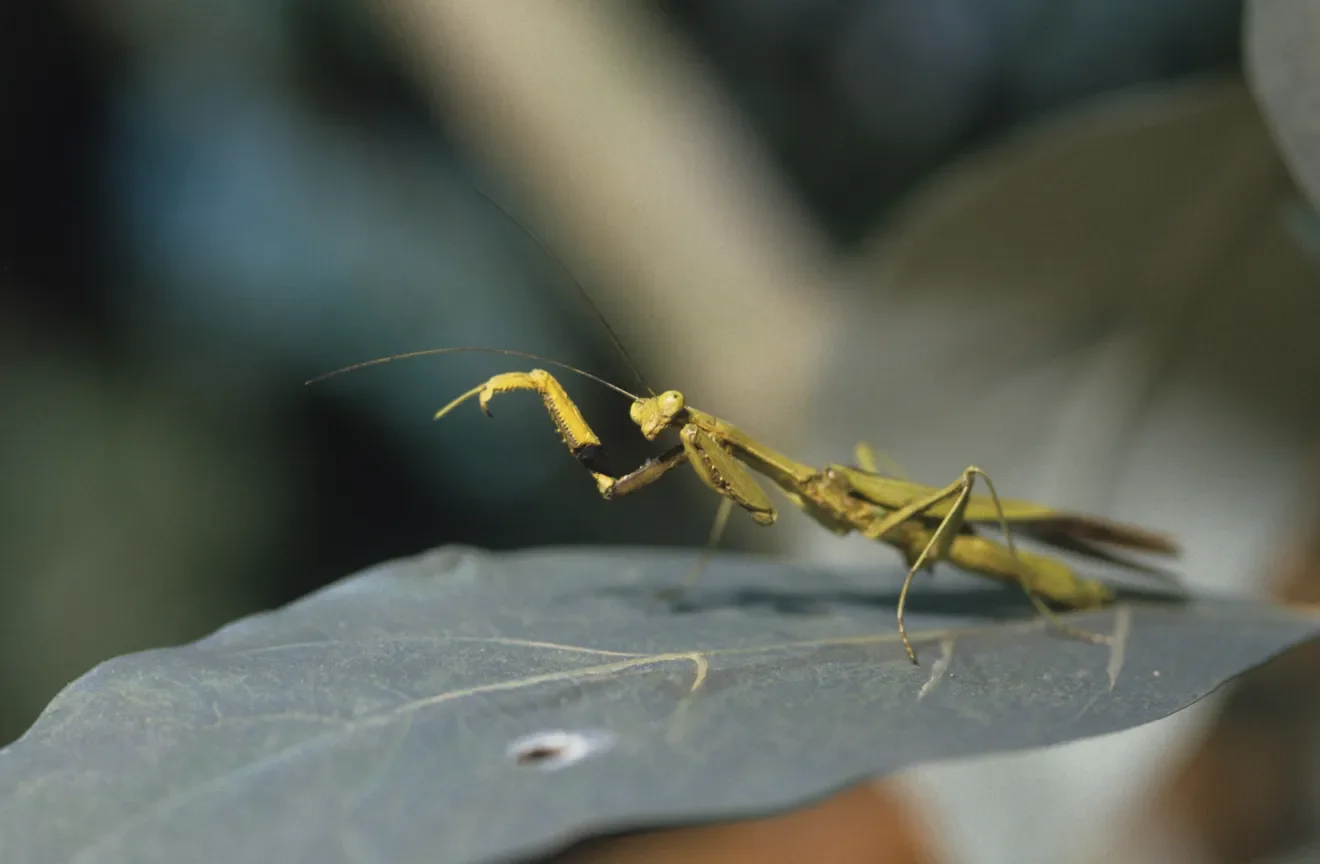
A praying mantis insect model that Barrett Klein helped fabricate for the American Museum of Natural History

"Melt," an artwork by Erika Harrsch
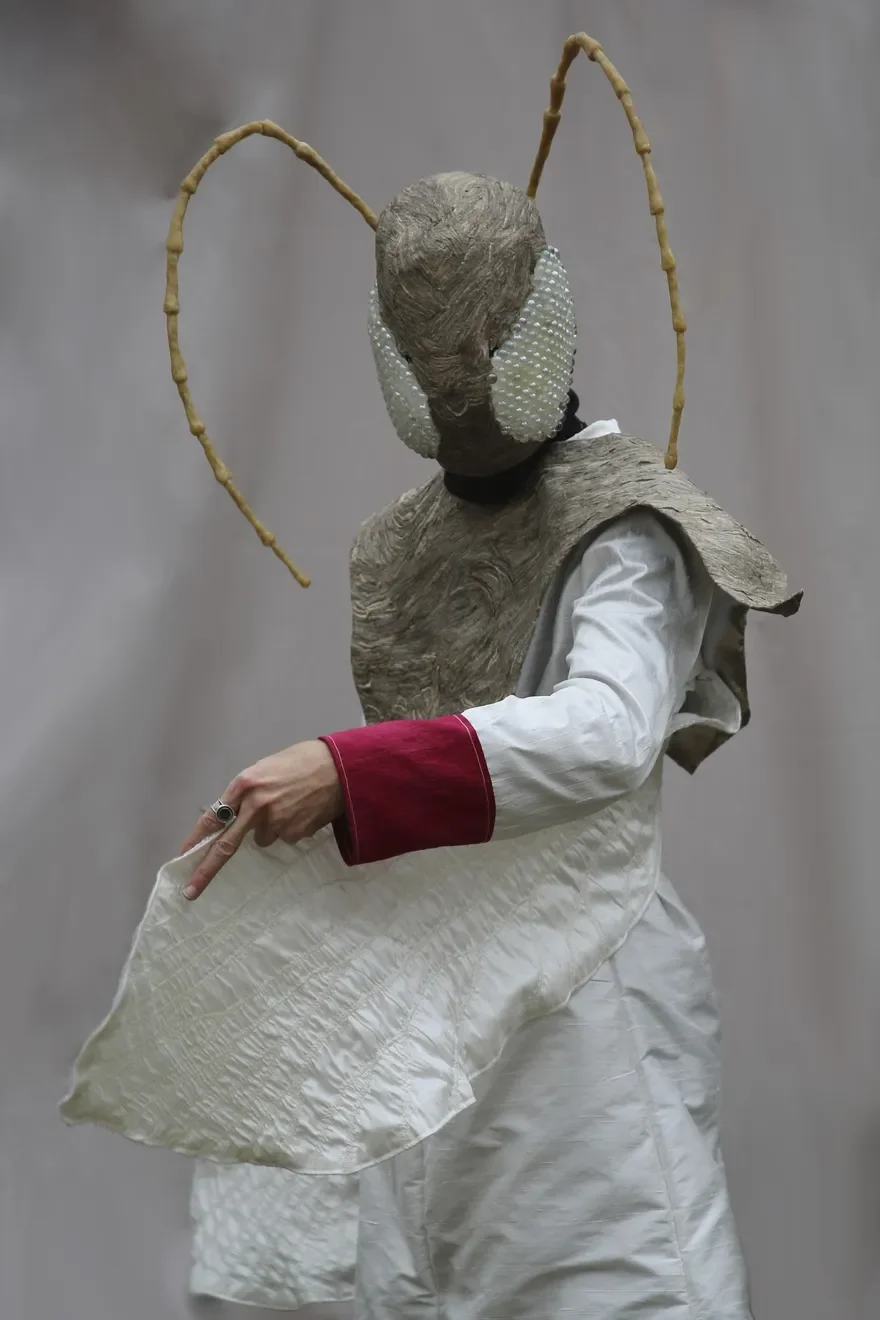
Costume made from products of silkworms, paper wasps, honey bees, cochineal bugs and lac insect by Barrett Klein.
The Event!
Insects affect everything we do, from what we eat and where we travel to how we dress, dance, play music, design buildings, and fashion tools. Insects are the lynchpins of ecosystems and fundamental to life as we know it. Join entomologist and author Barrett Klein for several days full of insect excursions, identifications, stories, and entomological techniques as we celebrate the evolution, ecology, and behavior of the most diverse lineage of animals. Come explore local microhabitats replete with those jointed-legged wonders who run the world.
We will see what comes to our UV-lights at night, and use standard approaches to observing, collecting, curating, identifying, and artistically depicting insects by day. There will be no need to harm insects during this course, though we will capture and handle them, view them through microscopes, all with the aim of understanding what makes them the evolutionary triumphs they are.
The science of studying insects overlaps with a humanities-based approach to appreciating them. Insects have impacted human culture since our earliest beginnings, and have affected practices across the world. Let’s explore “cultural entomology” to better appreciate the countless ways in which insects continue to shape our existence. No one will leave without a deeper appreciation for, and understanding of, the beetles, flies, bees, and true bugs who have inspired artists and engineers, vectored pathogens, provided sustenance, and fortified human empires.
Registrants will:
Identify the most common orders and families of insects by recognizing key evolutionary traits
Distinguish insects from all other life forms, including their closest relatives
Observe and sketch insect behavior in the field
Create scientific illustrations of insects, accurately depicting their anatomy
Use insect nets, forceps, aspirators, UV lights, and other tools of the trade
Properly curate specimens (if desired)
Learn about the marvels of insect behavior and their importance as pollinators, decomposers, and ecosystem drivers, as well as shapers of human culture
Questions or interest in making lodging reservations:
For event & lodging information: Cassidy Drummond, Education Coordinator at 937-794-3360
Email: cassidy.arcofappalachia@gmail.com
Cancellation policy. In case of cancellation, refunds will be granted in full up until May 12, 2026. After that time, all payments are final and if not used, will be recorded as a tax-deductible donation to the Arc of Appalachia. Registrations are transferable. If transferring your registration to another party, please be sure to give us your recipient’s name and email.
Lodging. Optional but highly encouraged: lodging at the Sanctuary – $55/night for rooms with shared bathrooms & $95/night for rooms with a private bathroom.
Meals. This course includes one shared meal. All lodges have fully equipped kitchens and dining facilities, and participants are asked to bring their own food supplies for all other meals. We will also provide local options for meals.
What should I bring? The following are entirely optional, but recommended by Barrett.
a flashlight (or headlamp) separate from your phone
raingear
knee-high waders (bonus: they work well against chiggers)
water bottle and day pack to carry it in
walking stick to support being on your feet on the trails
a notebook or clipboard, pencils, and paper (for sketching and field notes)
pocket money for snacks or small purchases
a light-weight, wide-brimmed hat for sun protection
light-weight, long-sleeved shirts and pants for sun and insect protection
personal care items (soap, shampoo, etc.), including sunscreen (note: some are more environmentally friendly than others)
sunglasses, if you are sensitive to bright sunlight
first aid kit appropriate to your needs
insect repellent for ticks & chiggers; see details below
Cell phone coverage works with most servers on Cave Road. Here you can run a hotspot off your phone for internet if you need it. Wi-Fi is also available at the Museum headquarters where we will be spending a lot of time, Inquire for the password.
Flying in? Participants may fly into either Cincinnati or Columbus. Both airports are 1 hour and forty-five minutes away from the Sanctuary. Shuttles are not available so participants may need to rent a car.
Emergency Messages. Emergency messages for course participants can be left at the mainline of the Highlands Nature Sanctuary (937) 365-1935 during daytime hours.
Poison Ivy. You will have minimal but possible exposure to poison ivy. In any case, the leaders know the plant well and will help you avoid exposure. If you do touch the leaves, washing vigorously with soap within an hour avoids reactivity in most people.
Should I prepare for insects? Generally, the Sanctuary is not a buggy place for biting insects. We experience very few to no mosquitoes or black flies at the Sanctuary. You may encounter several species of ticks in the open fields, and chiggers in tall grass if you choose to wander into them (which is a good reason not to), and a few deer flies in low moist areas. That said, our tick population here is lower than in most southern habitats. If any of these challenges are new for you, let us know and we will do our best to orient you. No exposure to at least some insects in southern Ohio is not a realistic expectation for outdoor fieldwork. Since we do have ticks in our southern Ohio preserves, please read the notes below.
Please click here to learn about the considerable hazards presented by ticks and chiggers, and prepare your own insect repellant that is safe to use, affordable to make, and will give you the confidence to enjoy the out-of-doors.