
Old Growth Legacies of the
Ohio Valley
Inextricable Human Legacies of the Region’s Oldest Forests
July 9th - 12th, 2026
Optional Thursday Night, Full Friday & Saturday, Partial Sunday
Held across multiple sites in southern Ohio and NE Kentucky
$350/person
2 breakfasts and 2 lunches are provided; lodging is available at the Highland Nature Sanctuary for Thursday and Friday nights. The Tremper Mound Manor House and many private accommodations in the nearby Portsmouth area are available for Saturday night.
This program is limited to a maximum of 12 registrants to ensure personal instruction
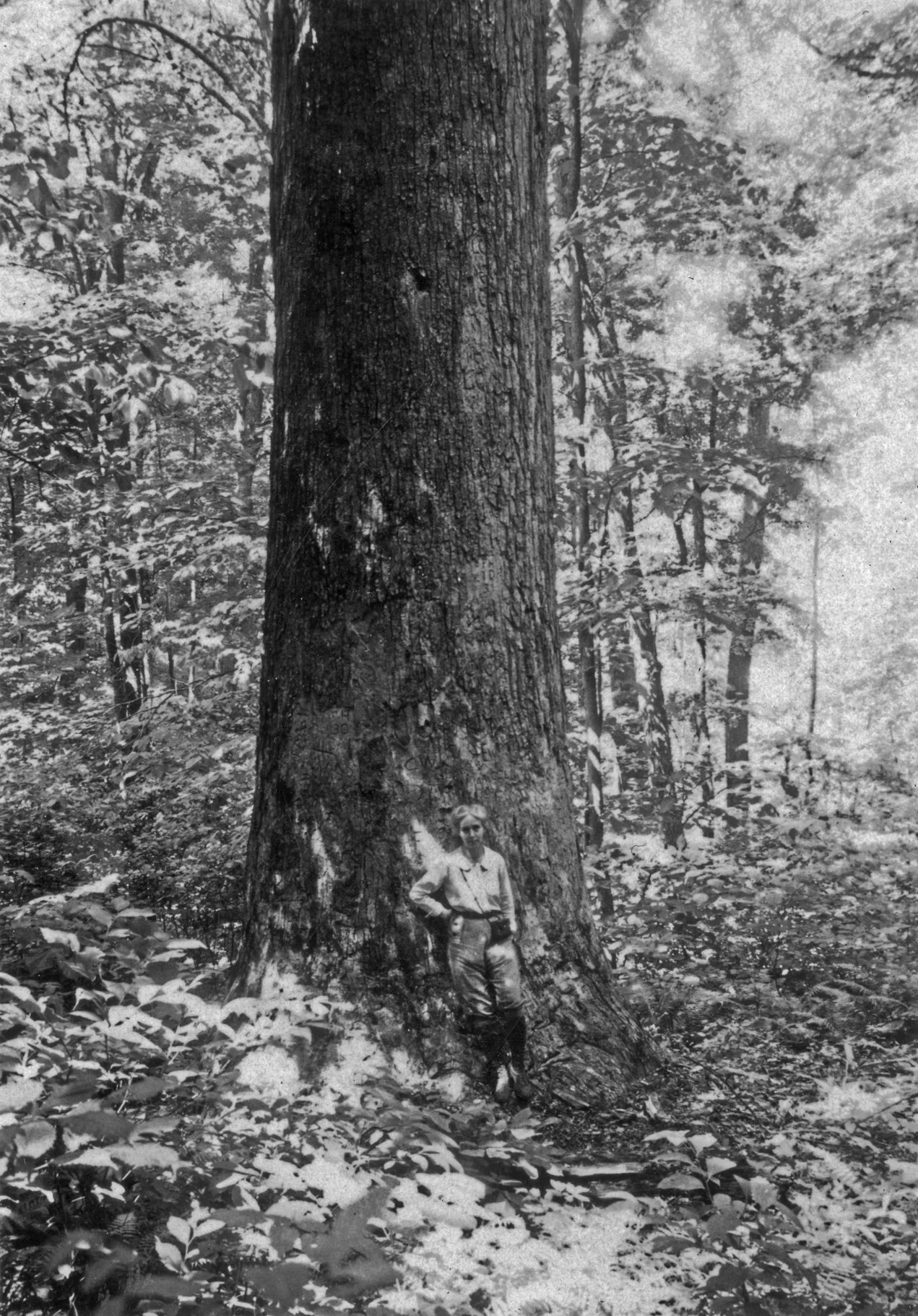
This weekend program aims to construct an intimate portrait of three local figures, their lives, and the indelible legacies they left across the region through the forests that survive them - with daily presentations, stories, and guided field trips at three protected sites in South-Central Ohio and Northeastern Kentucky.
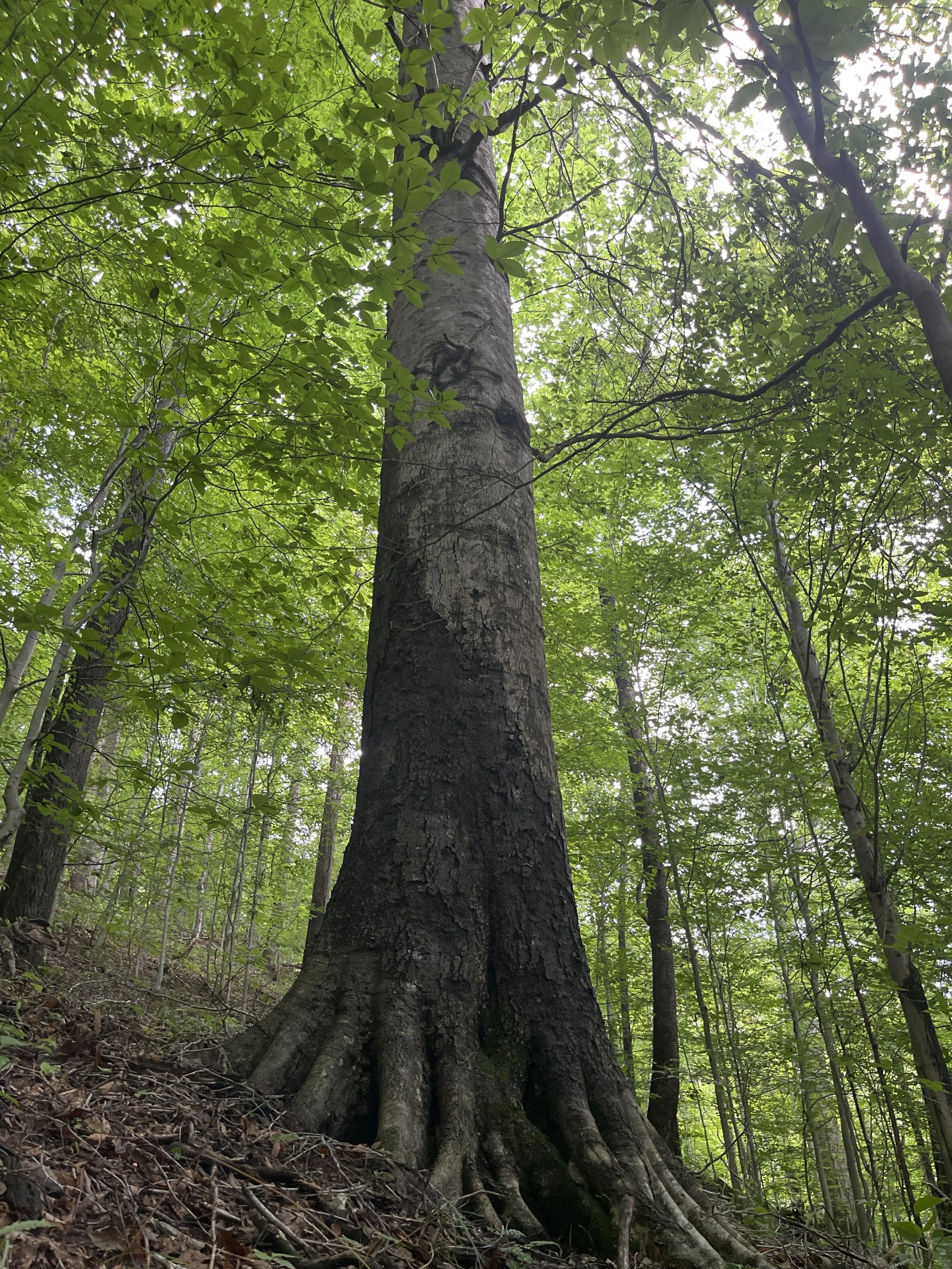
Course Focus: During this weekend program, we will be discussing the cultural and natural legacies of Emma Lucy Braun, John Roger Simon, and Jesse Hilton Stuart, through daily indoor and/or outdoor presentations, followed by guided hikes/field trips to three protected forests. The three protected sites for the weekend includes Fort Hill State Memorial, Simon Woods Preserve, and Jesse Stuart State Nature Preserve in W-Hollow. During field trips, we will also discuss the basic ecology of old-growth forests in South-Central Ohio and Northeastern Kentucky.
Location: The education headquarters for this event will be in two locations, starting at the Fort Hill State Memorial preserve located at the Highlands Nature Sanctuary and then moving to the Tremper-Simon preserve region in Scioto County.
Attendance: Workshop attendance will be limited to no more than 15 people.
Leaders: The leader for this event is Elijah Crabtree, an Education Specialist and Naturalist with the Arc of Appalachia.
Lodging: Lodging at the Sanctuary-Fort Hill area on Thursday and Friday nights is optional but highly encouraged since we will be spending two days here. $55/night for rooms with shared bathrooms & $95/night for rooms with a private bathroom. Lodging at the Tremper Mound Manor House on Saturday night is also optional but highly encouraged since we will be spending two days around the Tremper-Simon region in Scioto County and nearby in Greenup Kentucky at Jesse Stuart’s Boyhood Hollow, W-Hollow. The cost is $55/night in a room shared with another registrant of the same gender, and $95/night for a private room.
Cancellation policy. In case of cancellation, refunds will be granted in full up until June 10th, 2026. After that time, all payments are final and if not used, will be recorded as a tax-deductible donation to the Arc of Appalachia. Registrations are transferable. If transferring your registration to another party, please be sure to give us the recipient’s name and email.
Special Perk - July is Firefly Season! Fort Hill, Tremper Mound, and Simon Woods are all FANTASTIC destinations for firefly watching. On Saturday night, we recommend you linger after the program and enjoy the show at Simon Pond, where we will watch fireflies and listen for Whip Poor Wills. We will be happy to orient you to the species that will be flashing this time of the year.
What should I bring?
Cell phone for taking pictures of different trees and associated plants and for calculating tree ages on your calculator.
The select preserves for the program are in dark-sky country. Bring a flashlight or just use your phone if you plan to participate in either or both of the dusk/night side programs on Thursday Night and Saturday Night.
Binoculars (If you have a pair) to observe characteristics, features of trees and wildlife too distant for the naked eye.
Personal care items: Soap, shampoo, etc. (This is important if you’re staying at the Tremper Manor House)
Informal outdoor clothing for both wet and dry weather
Raingear is recommended as this course will go on rain or shine. Consider a wide-brimmed hat to shed the rain.
Water bottle and day pack to carry your lunch.
Notebook or clipboard, pen, pencils, and paper (for sketching and field notes)
Pocket money for snacks and small purchases; a credit card for dinners.
Personal care items (soap, shampoo, etc.).
First aid kit appropriate to your needs
Optional. Insect repellent for ticks & chiggers, see details below. We will also bring some to share.
Cell phone coverage and the internet. Most cell phones work at the Highland Nature Sanctuary and Fort Hill. The same is true for Tremper Mound, however, Simon Woods and Jesse Stuart Preserve may not have any signal depending on your cellular provider. If you want internet access at any Arc site, you will have to hook up a hotspot off your phone.
Meals: 3 packed lunches and 1 breakfast will be provided over the course of the program, which includes Friday, Saturday, and Sunday packed lunches and a Sunday breakfast.
Comfort in the out-of-doors. Please be prepared for hiking in warm to hot weather, as this program is scheduled for mid-July and intense heat-humidity is very possible. We will be spending most of our time outside in the field at multiple sites with rugged terrain. In south-central Ohio, our temperature highs in mid-July are around 85 degrees and temperature lows average around 65 degrees. We encourage you to check the weather forecast before you pack.
Flying in? Participants may fly into either Cincinnati or Columbus. Both airports are roughly an hour and a half from the Appalachian Forest Museum.
Emergency Messages. Emergency messages for course participants can be left at the mainline of the Highlands Nature Sanctuary (937) 365-1935 during daytime hours. Education staff cell phones will also be provided to you.
Should I prepare for ticks, chiggers, biting insects and poison ivy? You will have minimal but possible exposure to Poison Ivy. The leaders know the plant well and will help you avoid exposure. If you do touch the leaves, washing vigorously with soap within an hour avoids reactivity in most people. Chiggers typically peak in July and August as well as ticks so please prepare accordingly. If these challenges are new for you, let us know and we will do our best to orient you to them, help mentor your adjustment, or minimize exposure. No exposure to insects is not a realistic expectation for field studies but we do our best. We have also developed a fantastic homemade repellant for flying insects, ticks, and chiggers made of essential herbal oils that is stunningly effective and 100% natural.
Please click here to learn about the considerable hazards presented by ticks and chiggers and prepare your own insect repellant that is safe to use, affordable to make, and will give you the confidence to enjoy the outdoors.
Questions or interest in making lodging reservations:
For event & lodging information:
Elijah Crabtree, Educational Specialist at (740) 703-2633
Email: elijah.crabtree@gmail.com
Cassidy Drummond, Education Coordinator at 937-794-3360
Email: cassidy.arcofappalachia@gmail.com