
The Hidden World of Mosses
An Introduction to Moss Ecology & Identification
March 13th - 15th, 2026
Held at the Highland Nature Sanctuary & Appalachian Forest Museum
$325/person
One Saturday Dinner Provided to Registrants
This program is limited to a maximum of 12 registrants to ensure personal instruction
Over the course of this weekend program, registrants will have the special opportunity to learn introductory moss ecology and identification under the wing of Robert Klips, both in the lab and in the field. Klips is an exceptionally talented bryologist who has studied and taught moss ecology for decades. Now retired, he currently manages the bryophyte and lichen specimen collections at the Ohio State University Herbarium of Biological Diversity. He has also contributed to numerous books, periodicals, and websites. He is the author of “Common Mosses, Liverworts, and Lichens of Ohio”, a fantastic field guide that we strongly recommend registrants purchase before the start of the course.
This Course is Now Full
To join the waitlist, please email Elijah at elijah.crabtree@gmail.com.
or
Consider registering for a spot to sit in on the special-feature Saturday evening lecture by Robert Klips on Lichens!
“Just at the limits of ordinary perception lies another level in the hierarchy of beauty, of leaves as tiny and perfectly ordered as a snowflake, of unseen lives complex and beautiful. All it takes is attention and knowing how to look.” - Robin Wall Kimmerer
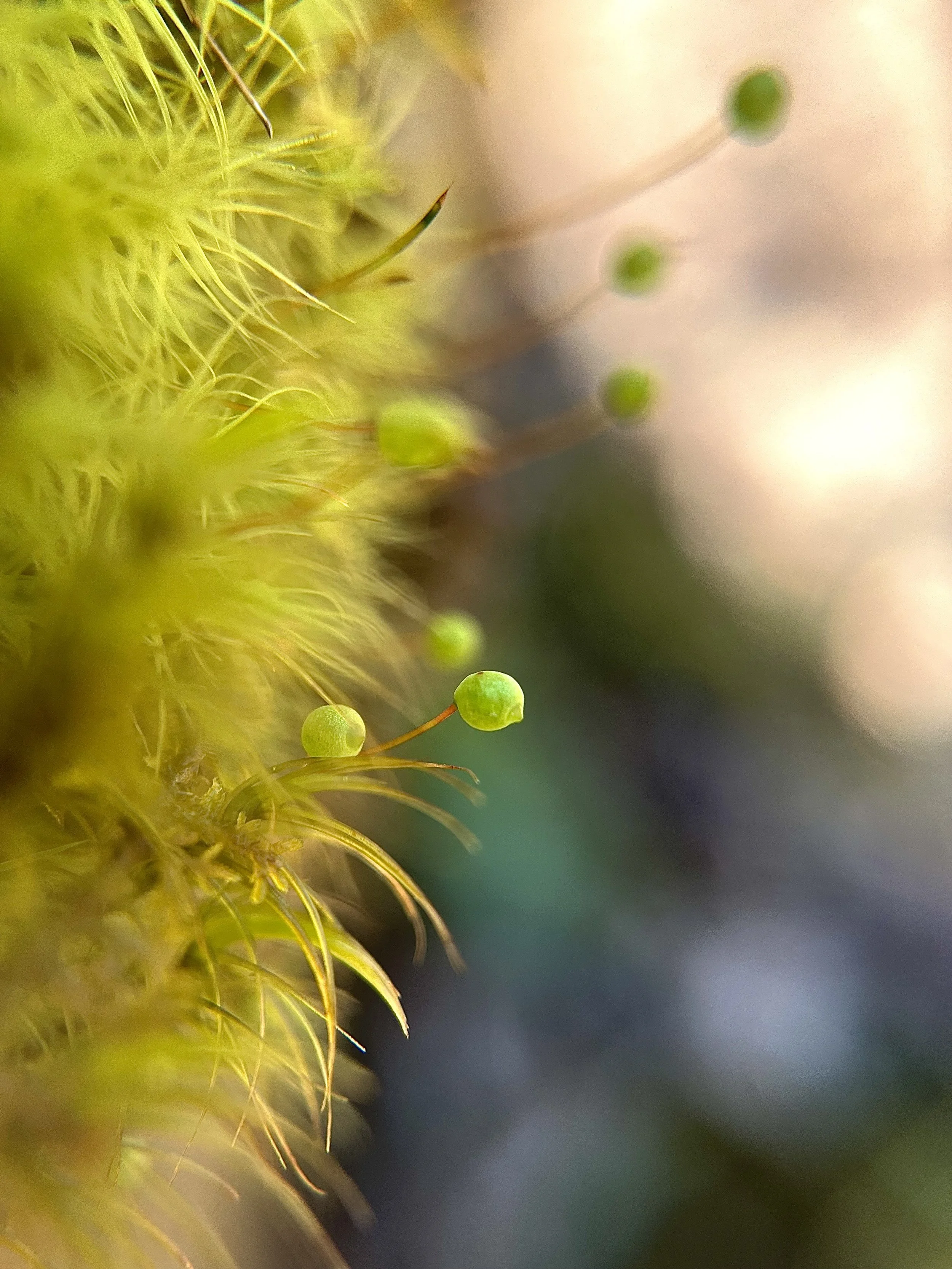
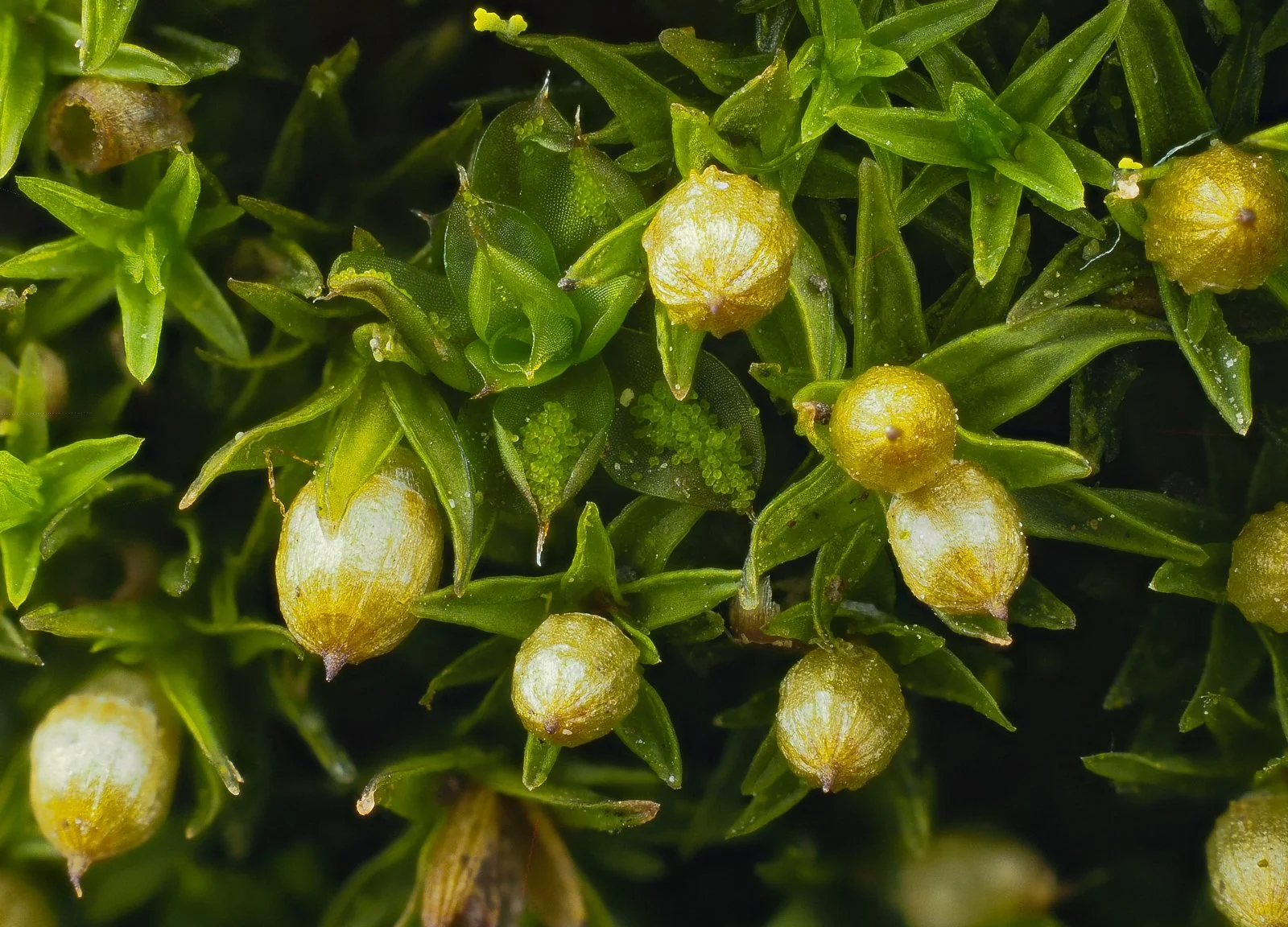
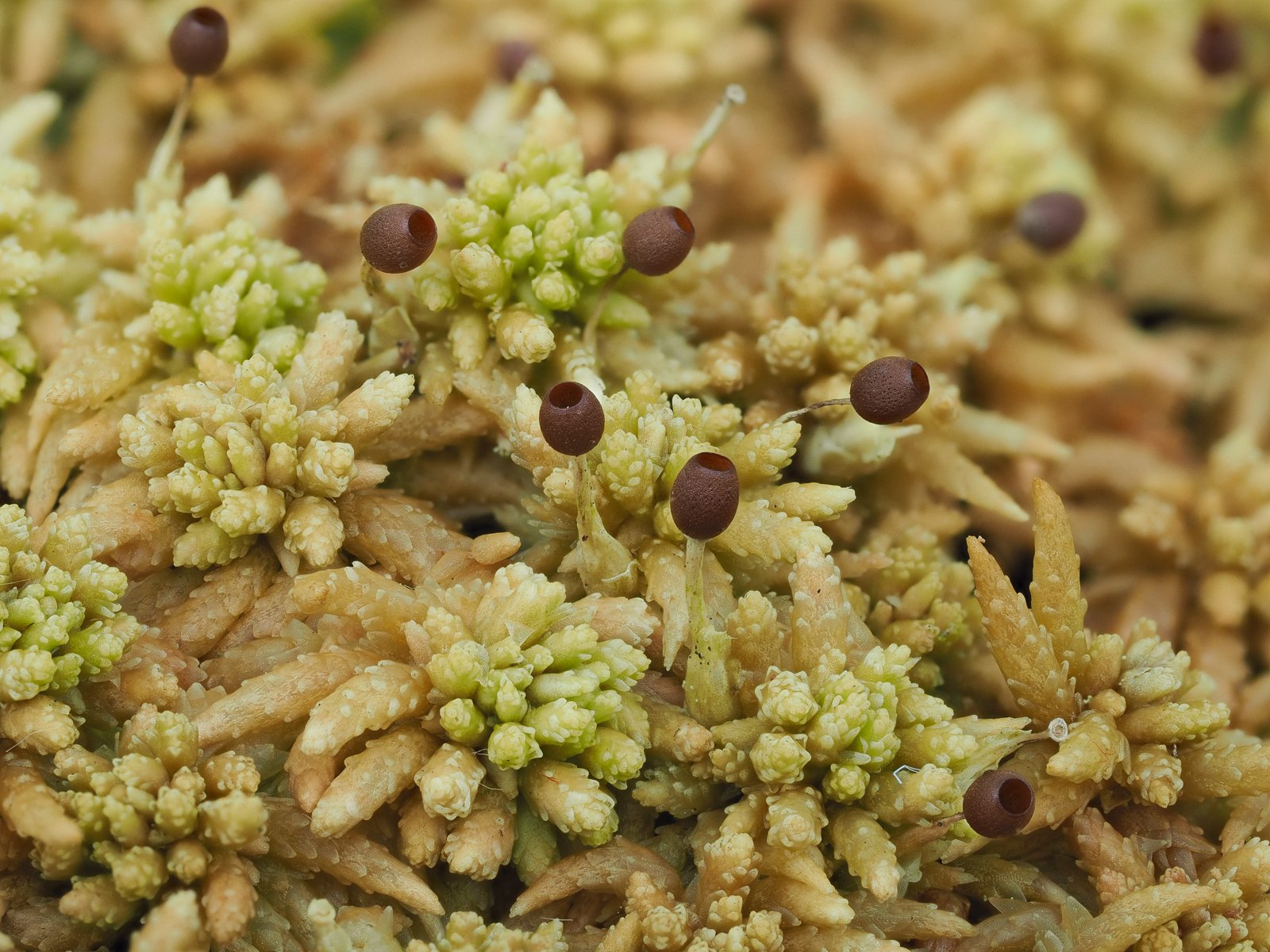
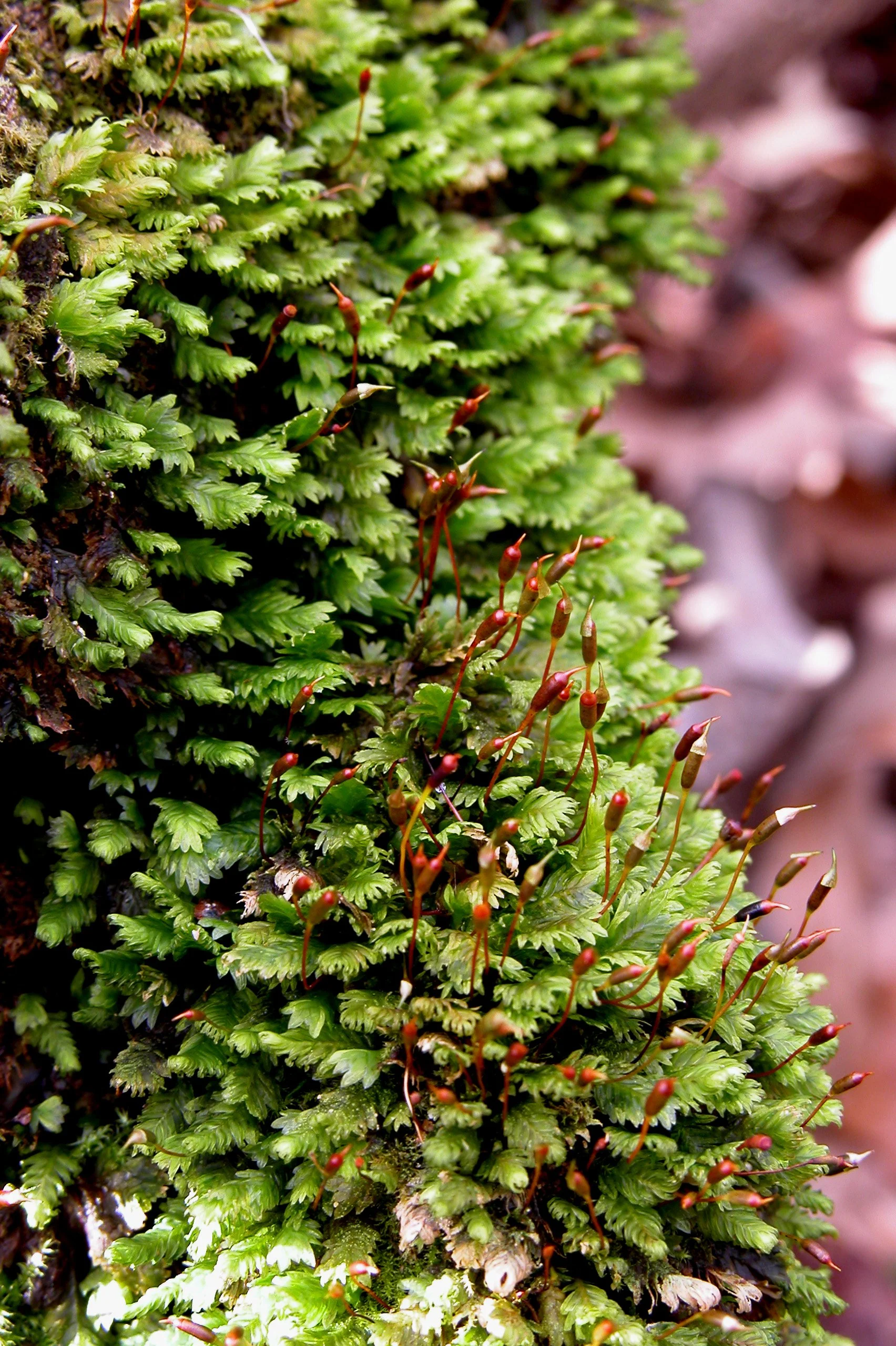
Mosses, they have yielded extraordinary levels of diversity over the eons. Nearly 400 confirmed species of mosses occupy Ohio’s landscapes, and more are still being discovered. Their intricate secrets are hidden in plain sight all around us, presenting as indistinguishable textures and shades of green to the untrained eye. To know them, you must enter their hidden world: Labyrinths of leaf shapes, unique cellular arrangements, and patterns, with otherworldly reproductive structures waiting to be explored by those who are curious enough. Unraveling the identity of mosses is a captivating discipline that radically changes our perception of a landscape and our understanding of its capacity to foster rich biodiversity.
This is an introductory course for beginners in moss identification, but it is also suitable for those with prior experience in mosses who are looking to sharpen their skills.
Course Focus: The focus of this course will center around introductory moss ecology, natural history, proper field collection, specimen preparation, microscope operation, and identification techniques. Registrants can expect to spend most of their time inside the Appalachian Forest Museum working with specimens and microscopes, but daily early afternoon field trips looking at mosses in their natural habitats will also be part of the program.
Location: The education headquarters for this event will be at the Appalachian Forest Museum at the Highlands Nature Sanctuary.
Attendance: Workshop attendance will be limited to no more than 12 people.
Leaders: The leader for this event is Robert Klips, an associate professor emeritus of Ohio State’s Evolution, Ecology and Organismal Biology Department and author of “Common Mosses, Liverworts, and Lichens of Ohio: a visual guide”.
Lodging: Lodging at the Sanctuary is optional but highly encouraged since we will be spending three days at the Highland Nature Sanctuary. The cost is $50/night in a room shared with another registrant of the same gender, and $80-$100/night for a private room.
Cancellation policy. In case of cancellation, refunds will be granted in full up until February 10th, 2026. After that time, all payments are final and if not used, will be recorded as a tax-deductible donation to the Arc of Appalachia. Registrations are transferable. If transferring your registration to another party, please be sure to give us the recipient’s name and email.
What should I bring?
Cell phone for taking pictures of mosses and other bryophytes, and collecting specimens, as your self-made field guide.
Bring a flashlight or just use your phone.
Raingear is recommended as this course will go on rain or shine. Consider a wide-brimmed hat to shed the rain.
Water bottle and day pack to carry your lunch.
Personal care items: Soap, shampoo, etc.
Informal outdoor clothing for both wet and dry weather
Raingear is recommended as this course will go on rain or shine. Consider a wide-brimmed hat to shed the rain.
Water bottle and day pack to carry your lunch.
Notebook or clipboard, pen, pencils, and paper (for sketching and field notes)
Pocket money for snacks and small purchases; a credit card for dinners.
Personal care items (soap, shampoo, etc.).
First aid kit appropriate to your needs
Optional. Insect repellent for ticks & chiggers, see details below. We will also bring some to share. For some peace of mind, know that March is not a time we should have to worry about chiggers and we should not have to worry too much about ticks!
Cell phone coverage and the internet. Most cell phones work at the Appalachian Forest Museum. However, if you want internet access at an Arc lodge, you will have to hook up a hotspot off your phone.
Meals: The course includes one Saturday dinner. All Arc lodges are equipped with fully equipped kitchens and dining facilities. Participants are asked to bring their own food supplies for breakfasts and lunches. Please plan accordingly.
Comfort in the out-of-doors. Please be prepared for hiking in both cold winter weather and moderately warm weather, as this program is scheduled for mid-March and a wide variety of conditions are possible. We will be spending most of our time inside the Appalachian Forest Museum learning how to identify moss specimens under a microscope. In south-central Ohio, our temperature highs in mid-March average around 53 degrees and temperature lows average around 31 degrees. We encourage you to check the weather forecast before you pack.
Flying in? Participants may fly into either Cincinnati or Columbus. Both airports are roughly an hour and a half from the Appalachian Forest Museum.
Emergency Messages. Emergency messages for course participants can be left at the mainline of the Highlands Nature Sanctuary (937) 365-1935 during daytime hours. Education staff cell phones will also be provided to you.
Should I prepare for ticks, chiggers, biting insects and poison ivy? You will have minimal but possible exposure to Poison Ivy. The leaders know the plant well and will help you avoid exposure. If you do touch the leaves, washing vigorously with soap within an hour avoids reactivity in most people. Chiggers do not typically peak until July and August. In march, the cool temperatures of the Highland Nature Sanctuary region support very little to no biting insects. You may encounter an early riser for the year and find a tick or two in open fields if you wander off-trail (which is another good reason not to). If any of these challenges are new for you, let us know and we will do our best to orient you to them, help mentor your adjustment, or minimize exposure. That said, no exposure to insects is not a realistic expectation for field studies. We have developed a fantastic homemade repellant for flying insects, ticks, and chiggers made of essential herbal oils that is stunningly effective and 100% natural.
Please click here to learn about the considerable hazards presented by ticks and chiggers and prepare your own insect repellant that is safe to use, affordable to make, and will give you the confidence to enjoy the outdoors.
Questions or interest in making lodging reservations:
For event & lodging information:
Elijah Crabtree, Educational Specialist at (740) 703-2633
Email: elijah.crabtree@gmail.com
Cassidy Drummond, Education Coordinator at 937-794-3360
Email: cassidy.arcofappalachia@gmail.com