
Saving Red Stone Wetlands
The Resurrection of Beechflats Swamp
Plans for a new 454-acre preserve in Pike County, Ohio
Entire Preserve Project Cost: $488,427
Current balance yet to raise: $458,427
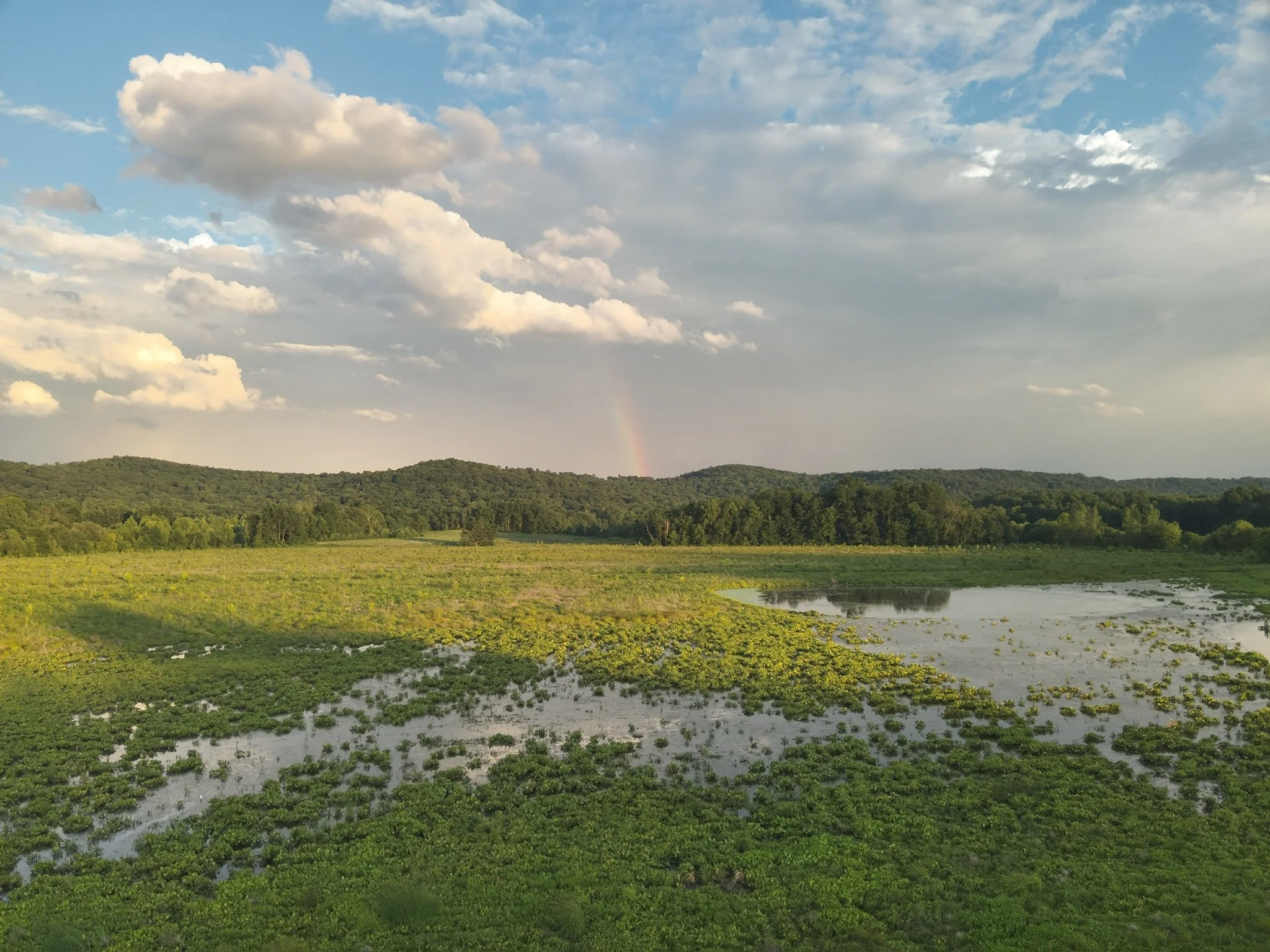
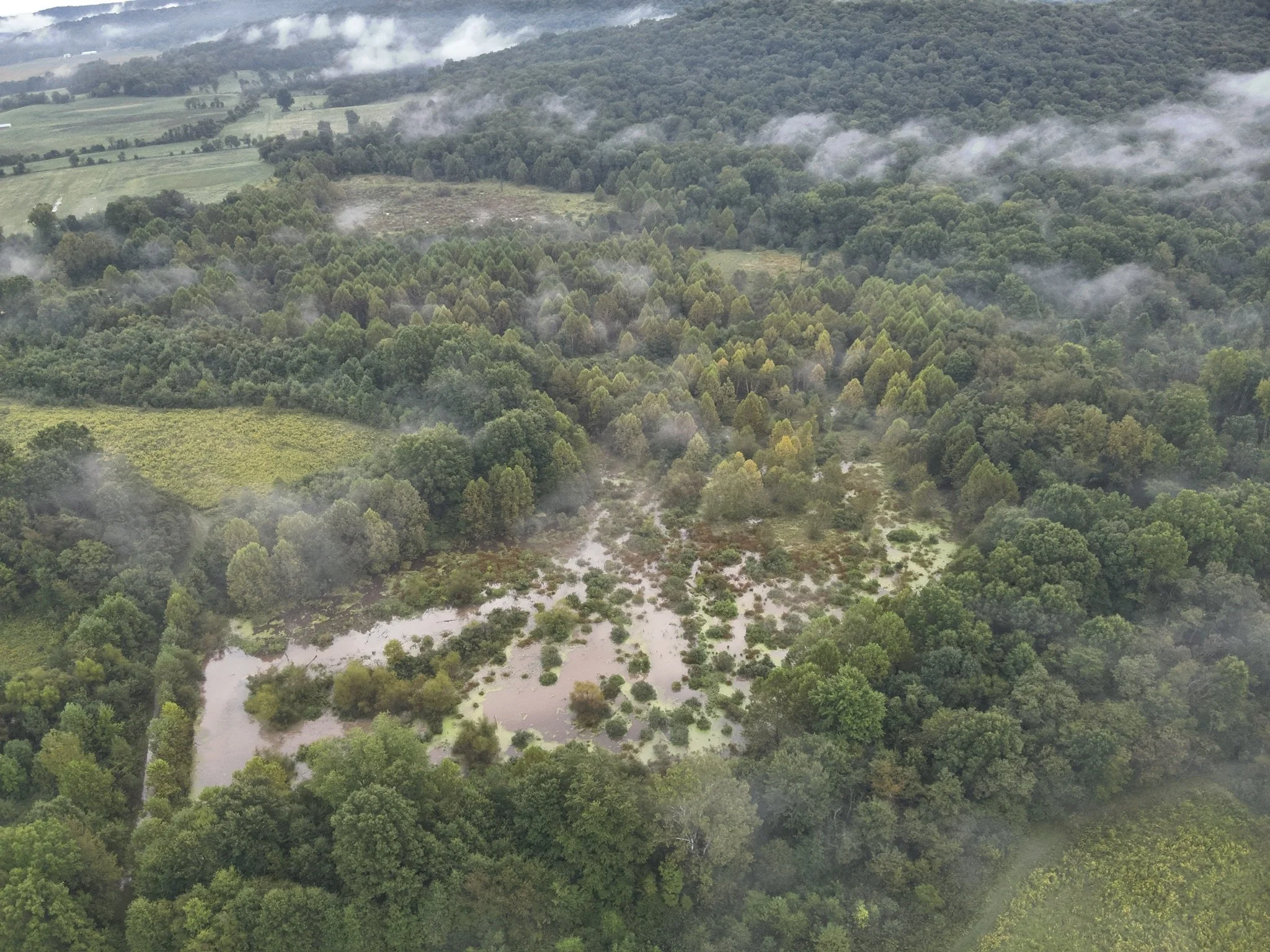
Red Stone Farm, just north of Fort Hill and southeast of the Highlands Nature Sanctuary, spans 1,200 acres in one of Ohio’s prettiest, most pastoral settings. Gently rolling green pastures are embraced by the sweeping curve of the Appalachian foothills, and the region is dominated by Mennonite farms. Of those 1,200 acres, 454 acres are poised to become a preserve sheltering extensive wetlands. Today this project is one of the Arc’s most highly prioritized Land Campaigns. This is just the beginning of what is destined to be the largest wetlands preserve in all of Southern Ohio!
Reflections of Nancy Stranahan, Director of the Arc of Appalachia
It was in late October ’26 that I followed the long driveway off Frost Road in Pike County that wound its way across the old farm fields, then up to the big farmhouse on the hill. From its wrap-around porches, I could survey what was, not so long ago, a 1200-acre working farm. My memories filled in what was now missing: the dark straight-backed beef cattle cruising across an ocean of grass, herds of doe-eyed Jersey dairy cows, white ewes studding the green hillsides, and flocks of chickens and turkeys. All of those animals were on the move, literally, thanks to Farm Manager Drausin Wulsin’s vision to grow meat for human consumption that was healthy, organic, grass-fed, and raised ethically, organically, and sustainably.
Drausin wanted to nourish people, but he also wanted to nourish Red Stone’s tired soils, worn out by conventional farming. To this end, he moved his animals across the landscape in imitation of their wild ancestors. The animals were guided to fresh new pastures twice a day, constrained by strands of electrical fencing. Even the chickens migrated, their wheeled eggmobile hauled behind them. It was laborious, but it worked. It decreased the spreading of worms - always the curse to livestock - and it greatly increased the vitality of the animals’ forage. The animals were radiantly healthy.
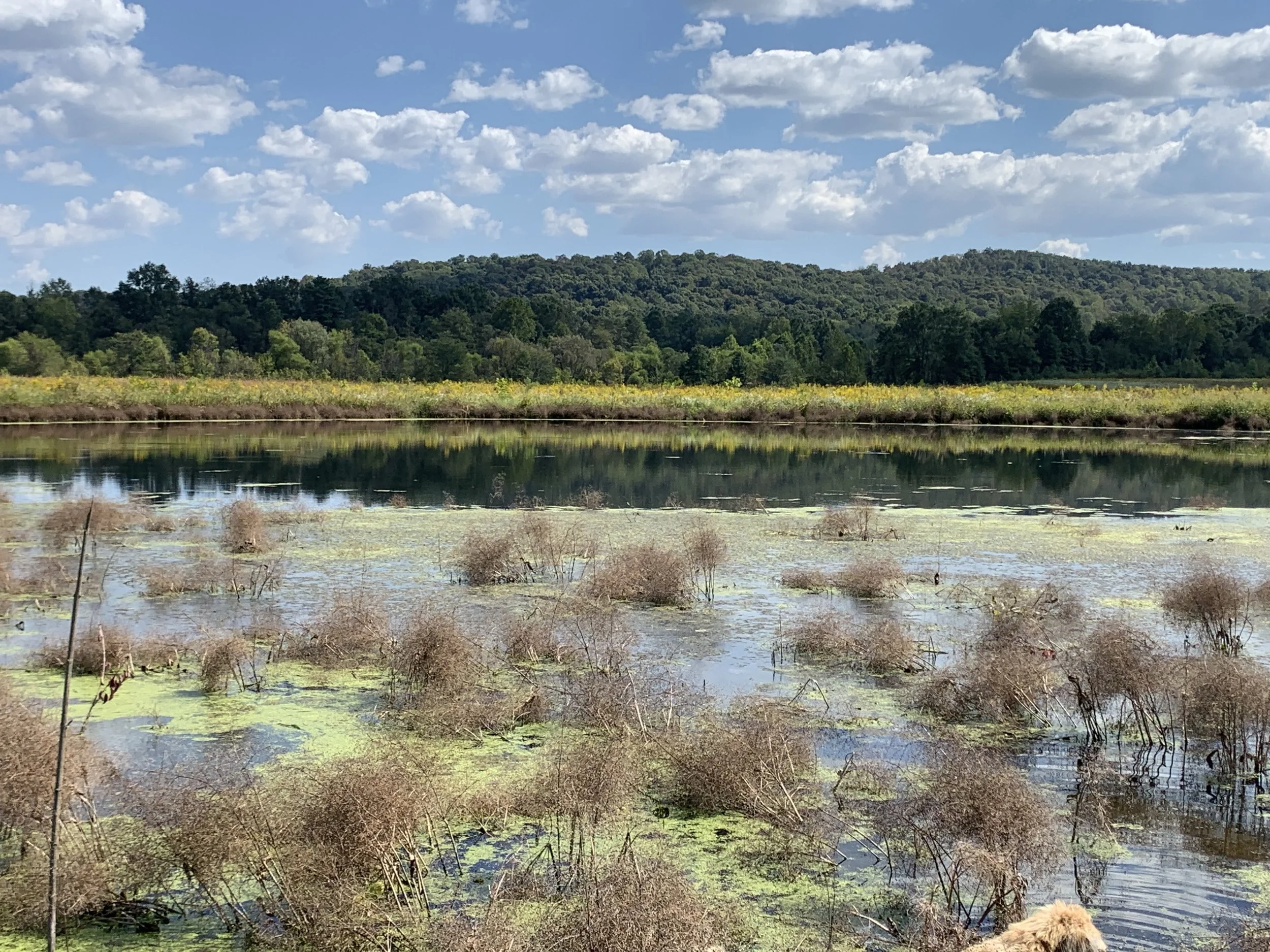
Today, as I take one last survey of the land before I knock on the front door, the only domestic animals in sight are two rambunctious farm dogs. My eyes rest on the large expanses of shallow water in the bottomlands, shining like mirrors beneath the sun. Two wood ducks wing across the sky, and I hear the chirp of an errant spring peeper. The wire fences are gone. Even from the porch, I can see thousands of young trees growing in the wet fields - trees like shellbark hickory, swamp white oak, sycamore, river birch, and pin oak.
After nearly two centuries of being a farm, Red Stone Farm is melting back into its primeval wetland roots, like a spool of time being rewound. Most of the bottomlands I see stretching below me will soon become one of the Arc’s newest nature preserves, and in my mind, perhaps because I am such a lover of wetlands, one of the most exciting projects in this entire magazine.
I came prepared with questions to prompt Drausin to tell me his story, but I needn’t have worrried. I only had to ask one question, and then he was off and running. Here is the story pretty much as he told it.
The Story of Red Stone in Drausin’s Own Words
You asked me what authors have inspired me the most. The late great Wendell Berry is one of them. I have read thousands of pages of his works. He didn’t tell me how to run a farm, but he reminded me why it matters. He wrote about rural America, human integrity, and a sense of place better than anybody. Berry shared something simple that lodged in my head as an inner compass: “The best fertilizer is footsteps.” I hear this refrain all the time.
The Best Fertilizer is Footsteps
I’m a fourth-generation Wulsin, a descendant of the Wulsin legacy that founded the Baldwin Piano Company in Cincinnati three generations ago. My father, John, a surgeon in Cincinnati, eventually inherited a son’s share of Baldwin stock. My father didn’t focus on financial investments and money-making. He was an intellectual who inclined toward idealism, especially in regard to farming. And he loved nature. So, in 1968, he took his Baldwin inheritance and bought what we now call Red Stone Farm.
Once he got his feet wet on the property, my father discovered that most of the land was unfarmable because of its hydric bottomland soils. Since the farm was only partly tiled with clay, he invested in systematically burying plastic tile throughout most of the bottomlands. The threat of flooding led him to straighten and deepen the upper Baker Fork, which ran through the middle of the property. The farm could now grow traditional crops of soybeans and corn, and, so far, this story reads like the history of nearly every other farm in the eastern United States.
Going Against the Grain
That would have been the end of the story, except I inherited a good share of my father’s idealism. When I was a young adult, my father and I would spend hours talking about how modern farming practices have stripped soils of their natural fertility, and what that meant for the future of our land and our people. When I started reading about the grass-based dairy experiments going on in New Zealand, my father became interested in the idea of practicing a more sustainable form of agriculture at Red Stone. We adopted Allan Savory’s hefty book, Holistic Management, as our bible. Savory was absolutely brilliant. He was raised in Zimbabwe and, at various times, served as an ecologist, soldier, farmer, rancher, national park manager, and Rhodesian politician. He became an expert in managing the dry, brittle grasslands that cover so much of the world, especially in Africa, and he promoted the radical idea that livestock are the best way to reverse the trending loss of fertile grasslands to desert.
In the 1990’s, with my father’s blessings and with the confidence Savory gave me, I moved the farm operation from crops to grass-fed dairy, and then to grass-fed meats, which we would eventually sell directly to customers in the Cincinnati and Columbus farm markets. This kind of agriculture went against local habits, and it was definitely hard work. But one really good thing came out of all this. Moving animals onto fresh pasture twice a day put my feet intimately on the ground. I began to notice things that wouldn’t have been obvious from the window of a Polaris or the seat of a tractor. One of those things was those doggone wet spots; quite a few of them, actually, even with the tiling. They were troublesome to work around as they grew rank weeds that were unpalatable to livestock. The semi-annual flooding events were also aggravating, creating mild crises twice a year. Sometimes cows were up to their knees in water, which compacted the soil.
Doing Something with the Back Forty
We were, however, building soils. With Savory’s system of managed grazing, we raised our soil’s organic matter from 2% to 6%, and I was gratified. Other than not being fully profitable, the plan was working!
Around this time, I took notice of the unproductive 40-acre soggy bottomlands at the back of the farm, an area that had never been tiled with clay or plastic, and was way too wet and overgrown to grow crops on or be grazed with livestock. These soils were probably close to virgin condition. It occurred to me I might do something useful and pretty with this back region. So I designed two dams and a sluice-box system that would back up the water to form a shallow lake in the winter, attracting migrating ducks and other waterfowl. The plan was to drop the water level back to normal in the growing season, so that the many trees within its footprint would continue to prosper.
Enter the Beaver & the Discovery of the Wetlands Mitigation Program
However, beaver arrived almost immediately! They quickly deduced that the sluice box was the lynchpin of my plan, and they made it inoperable by covering it with mud and sticks. I took a deep breath and said, “Okay, I know I’m smarter than beavers,” so I installed hog panels around the box to keep them at bay. That worked great for a couple of months until the beaver stacked mud on all four sides of the hog panels. I became quite aggravated. Bit determined not to be foiled by them, I went wading into the water to break their construction apart. In the process, I seriously cut my leg, which became infected enough I had to spend two nights in the hospital. That gave me time to reflect. When released, I had resolved to surrender to the beaver and let them do their thing. The high water they enforced consequently killed the growing trees, just as I feared. But the standing dead trees created a rich habitat of their own. The result of this was a gorgeous, spiritually uplilfting, year-round lake, which we came to love.
About that time, I attended a presentation at a nature center on wetland mitigation, and a bell went off. Wetlands mitigation works basically like this: Once a plan is approved by a team of various agencies under the oversight of the Army Corps of Engineers, a wetlands restoration project is permitted to take place on a piece of land that was once naturally a wetlands, but no longer, having been destroyed in the past. The program is an incentive to restore wetlands to the landscape. Restoration usually includes breaking farm tiles, raising water levels, removing all the non-native invasive species, and planting wetland-loving trees, shrubs, and grasses. Sometimes even restoring natural sinuosity to a stream’s channel.
The owner has to assume the expense of all this work, but once the project is certified by government agencies, the credits assigned to the project can be sold to a buyer in increments. Buyers of wetland credits are developers of houses, pipelines, factories and roadways. These entities are required to mitigate their destruction of wetlands in the same or adjoining watershed. If you live out in the country, as I do, there isn’t a lot of development going on. So if this all sounds risky, it is. But if everything works, the mitigation money coming in can eventually be substantial. “Maybe,” I thought, “ I can take these unproductive 40 acres and turn them into something profitable for my struggling meat and dairy businesses, and help prop up the farm’s income.”
A Lake is Sacrificed
Well, the Army Corps Team did approve my plan, but only if I drained the lake. Their methodology only awards credits for reforested wetlands, and a lake with dead trees didn’t count. Removing the beaver-enhanced dam was painful, but here’s the irony of it. The fact that beaver had killed the trees was the only reason I had a potential project at all. Had those trees been alive, those 40 acres would have essentially been intact wetlands, and intact wetlands don’t count for much in this program. In the end, it was inadvertently the beavers’ doings that made this project eligible.
And so the project moved forward. We removed invasive plants, gently diffused water levels, and planted 30,000 native trees and shrubs. This effort required a significant up-front investment before credits could be sold.
A Challenging Time for Wetlands Mitigation
Right when the project received certification, the recession of 2008 hit. Because most purchases of credits come from real estate developers, for the next four years there were no offers to buy mitigation credits. It was a tense situation, because I wasn’t realizing any returns on my investment. Fortunately, a major bypass was being built around Portsmouth, and credit sales from that project eventually brought us out of our financial deficit. Our wetlands mitigation project began to succeed, and acreage that had once been the farm’s backwater was becoming its beating heart.
Then came the year of testing. In 2018, rains didn’t cease throughout the winter. I kept the animals on high ground as much as possible, but had to move them to lower pastures periodically to diffuse the damage. It was a miserable winter, and when it was over, the soil’s organic matter had regressed to 4%. It was depressing to lose momentum in this fashion, and I began to question the virtue of concentrated grazing on hydric soils.
Enrolling Another 236 acres in Wetland Mitigation
Following our our past success, and enrolled another 236 acres of bottomlands into the wetlands mitigation program, bringing total mitigation acreage to 454 acres. The newly added ground, though, presented a much stiffer challenge. In the first phase, we had nearly virgin soils and an existing native seedbank to lean on as a resource for restoration. But now we were dealing with fields that had been under tillage for 80 years and in pastoral agriculture for 10. We had to kill non-native fescue and bluegrass before planting 100,000 trees in a span of just two years.
And then there was the drain tile. It was just about everywhere, draining water from our soils. Finding the tiles so we could break them was no easy task. We started by breaking the systematically spaced plastic drain tiles my father had installed, but the water stubbornly refused to return to the surface. We then began looking for much deeper, randomly-placed clay tile buried 50 to 100 years ago. Every time we located one row of tile and broke it, water, being heavy, would sink to the next nearest dormant tile line and reactivate it, rather than rising to the surface. Finally, we found all the tiles in one section of the field and broken them. The very next morning we awoke to finally see the water visibly collecting on the soil’s surface. This was a long-term search-and-destroy mission, but in the end, it worked.
We didn’t have the mandate to restore sinuosity to the creek, but we did the next best thing. We softened the deep vertical walls of upper Baker Fork by moving enough dirt to restore the original gentle slope of the streambank. When floodwaters came, they had more room in which to flow, causing less erosion and scouring of the creek bottom and sides.
And then the beaver returned!
Because the restoration slowed down the current, the beaver, who apparently keep their eyes on all things water, decided the upper Baker Fork could once again become a suitable home. More confident now that a dam might withstand occasional raging floodwaters, they built one across the creek, then two, and then three; reclaiming their ancient homelands. Their dams slowed down flow enough that soil sediments began accumulating, raising the creekbed. The beavers were back, proving intent to heal the waterway.
The puzzle I had set out to solve on this property 40 years ago appeared to be presenting itself. By listening to the land, I found a way to work with nature instead of against her. By releasing the land to do what it wanted, I was able to generate an income, while witnessing a gratifying explosion of wildlife. By 2022, I retired our grassfed meat endeavors entirely, in alignment with both an aging body and recent insights. I began making plans for additional wetlands restoration projects that would include much of remaining farm acreage.
But life is seldom perfect.
I had already let so much go in my life. I had let go of a dependable banking job to become a farmer. I had let go of traditional agriculture practices and the short-term profits they could have brought me to forge a new path. I had let go of my agrarian ideals when I faced the truth that these particular hydric soils were more suited for wetlands than agriculture. Lastly, I had let go of my pride enough to accept and forgive that everything my father and I had done to create a farm was now being undone by my own will and hands - fences, tile drains, and channelization of the creek. My lessons about letting go, however, were not over.
Though I was Manager of the farm by agreement with siblings, we were all co-owners. The day came when my siblings requested I buy out their shares. I had worked for 40 years to keep the farm intact. But with most of the mitigation credits still unsold, the only way I could realize their proposal was to sell some of the farm. I sold the most farmable acreage on the northeast to my neighbors and friends in the Mennonite Community, who carry on my romance with the rural, agrarian lifestyle. I then turned to the Arc of Appalachia for hopeful partnership in next steps.
[ End of Interview with Drausin Wulsin. ]
Here at the Arc, we’ve watched the wetlands restoration at Red Stone Farm with awe and admiration. We’ve long known of the legendary vast swamp, called Beechflats, that once lay between what is now the Sanctuary and Fort Hill. Like most wetlands in Ohio, it was drained beyond recognition. We had the pleasure of watching Drausin breathe Beechflats back to life.
Turning a Wetlands Mitigation Project into a Nature Preserve
When Drausin offered to sell the 454-acre swamp to the Arc of Appalachia for $1000/acre, one-seventh of what it would have fetched had it been drained, productive farmland, we didn’t hesitate to respond positively. “Yes!” “Most definitely, “Yes!” It would be an honor and a privilege to care for such an astoundingly beautiful and diverse wetland. Red Stone is now one of our most highly prioritized projects on our 2026-2027 Land Campaigns.
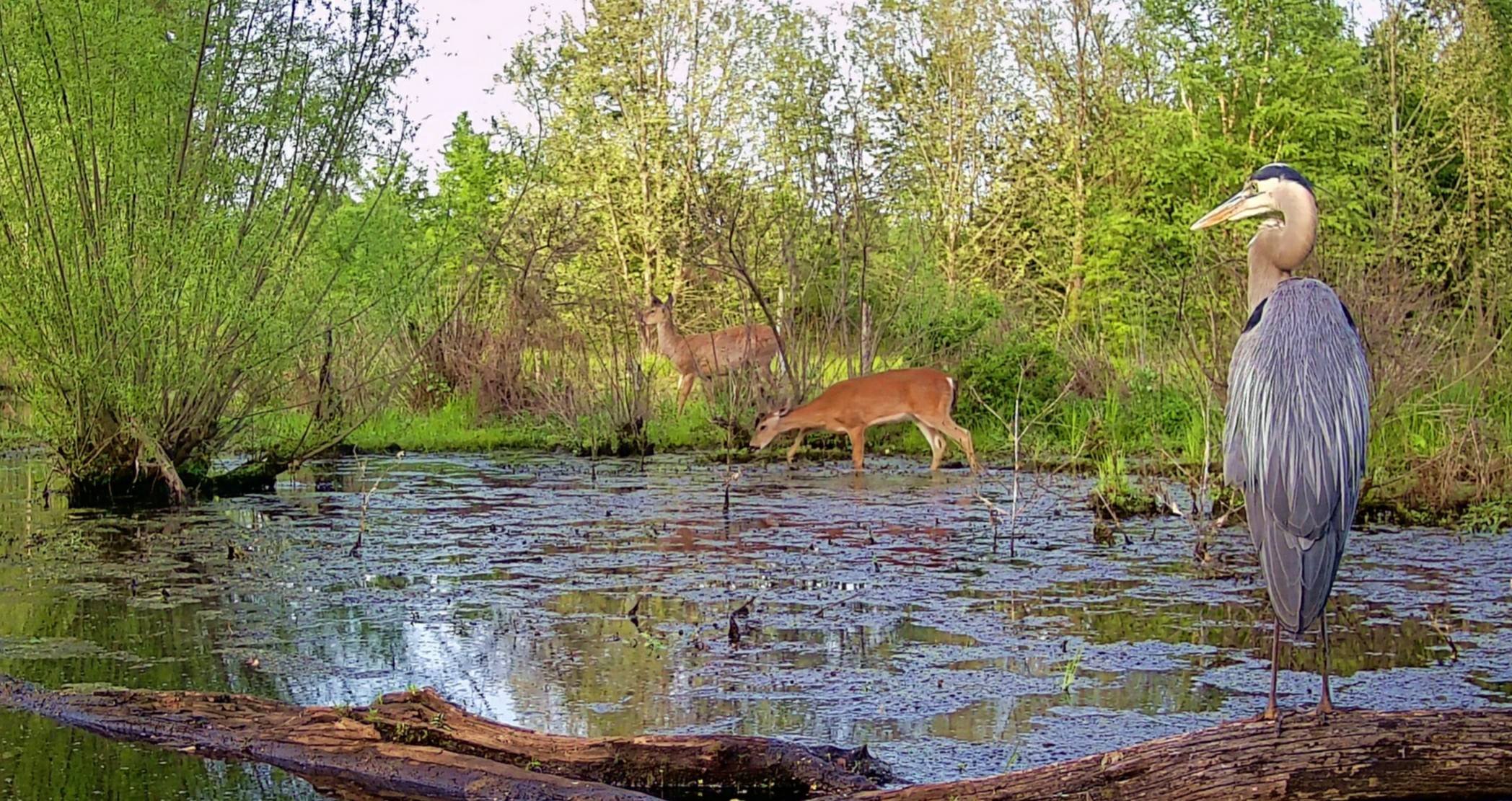
All kinds of migrating ducks fly through Redstone in the spring and fall. Wood ducks remain all summer to nest in hollow trees and raise their broods deep in the swamp. The high water levels in March form perfect breeding conditions for thousands of leopard frogs, spotted and jefferson salamanders, chorus frogs, and spring peepers - filling the swamp waters with new generations of life. When the swamp waters warm up, the deliciously soothing chorus of Cope’s tree frogs and the trills of American Toads begin. Later in the season, they are replaced by the clacks and booms of green frogs and bullfrogs. Crawdads and mudbugs, painted turtles, and snappers are all abundant. Green and great blue herons, white egrets, raccoons, mink, otters, and muskrats feed on the bounty.
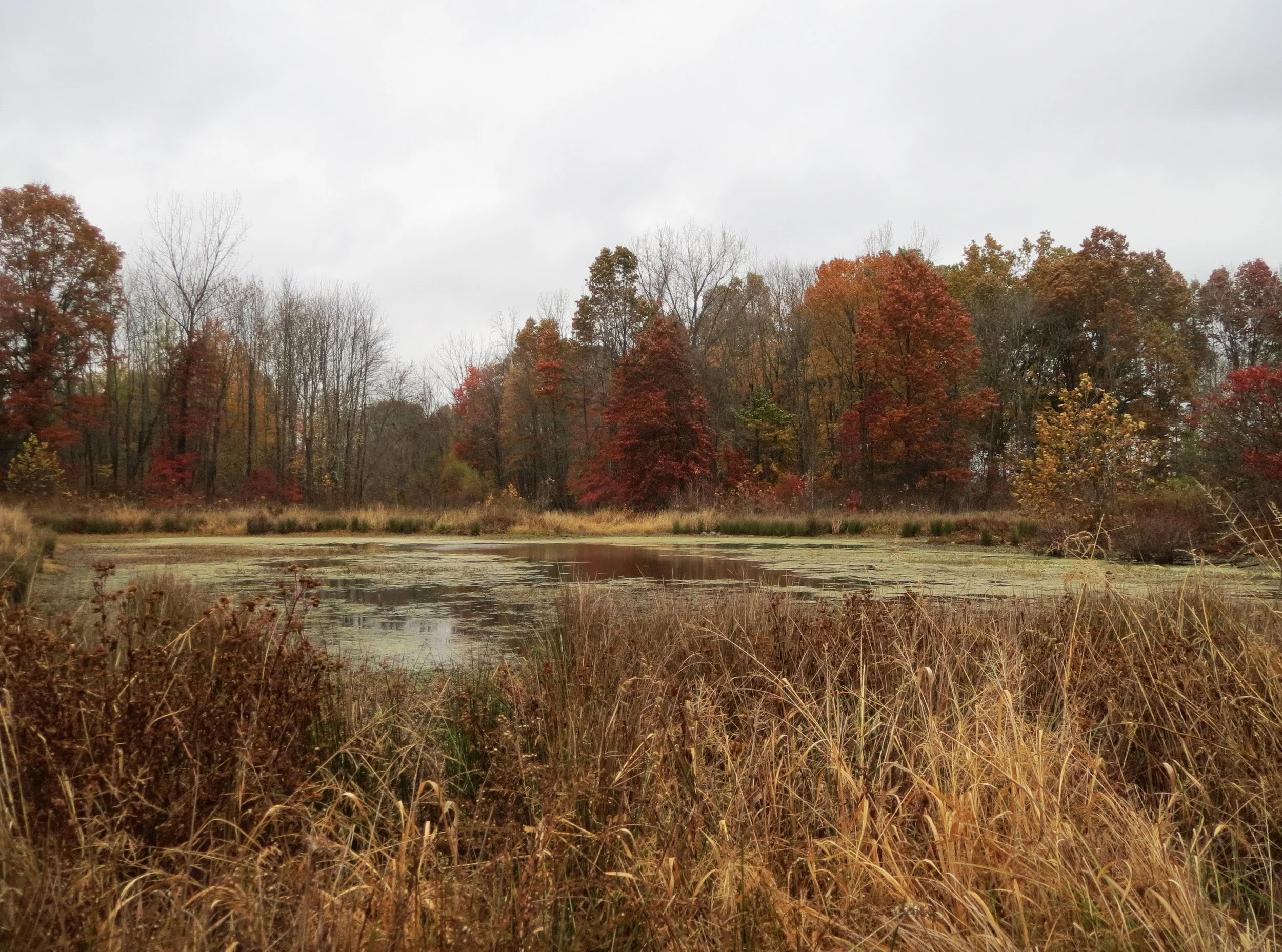
Gazing into the now well-established wetlands, I would never assess it as a restoration project. The swamp appears to have been here since time immemorial.
The Arc of Appalachia and Drausin Wulsin are committed to ever-strengthening our partnership in the years to come. Our hope is to someday double the preserve acreage at Red Stone Farm, creating what will one day be the largest wetlands preserve in all of southern Ohio. Who knows what might happen from there. The property is certainly a perfect educational classroom! Who knows where that might lead. One thing is certain: this is not the end of the story for Red Stone; it’s just the next chapter.