History of Red Stone Farm
The story of Red Stone Farm begins, like many noble endeavors, with small decisions by individuals driven by a dream. It’s nothing short of miraculous how an unsuspecting musical dynasty became partners in restoring natural landscapes in Appalachian Ohio. But yet again, here at the Arc of Appalachia, we like to be in the company of miracles.


Stories in the Land
Every farm in Ohio has water resources in one form or another, and every farm in Ohio has stories of the land. Red Stone has both in spades. If you linger awhile in this Pike County valley and scratch the surface of the soil, water will ooze out of the soil and puddle around your feet. So will the stories.
Red Stone Farm, which lies a few miles north of Fort Hill and a few miles southeast of the Highlands Nature Sanctuary, encompasses 1200 acres of land in one of the prettiest and most pastoral valleys in all of Ohio. Here, broad green gently rolling pastures are embraced by the sweeping curve of Appalachian foothills in a region now dominated by Mennonite farms.
The Death of Beechflats Swamp
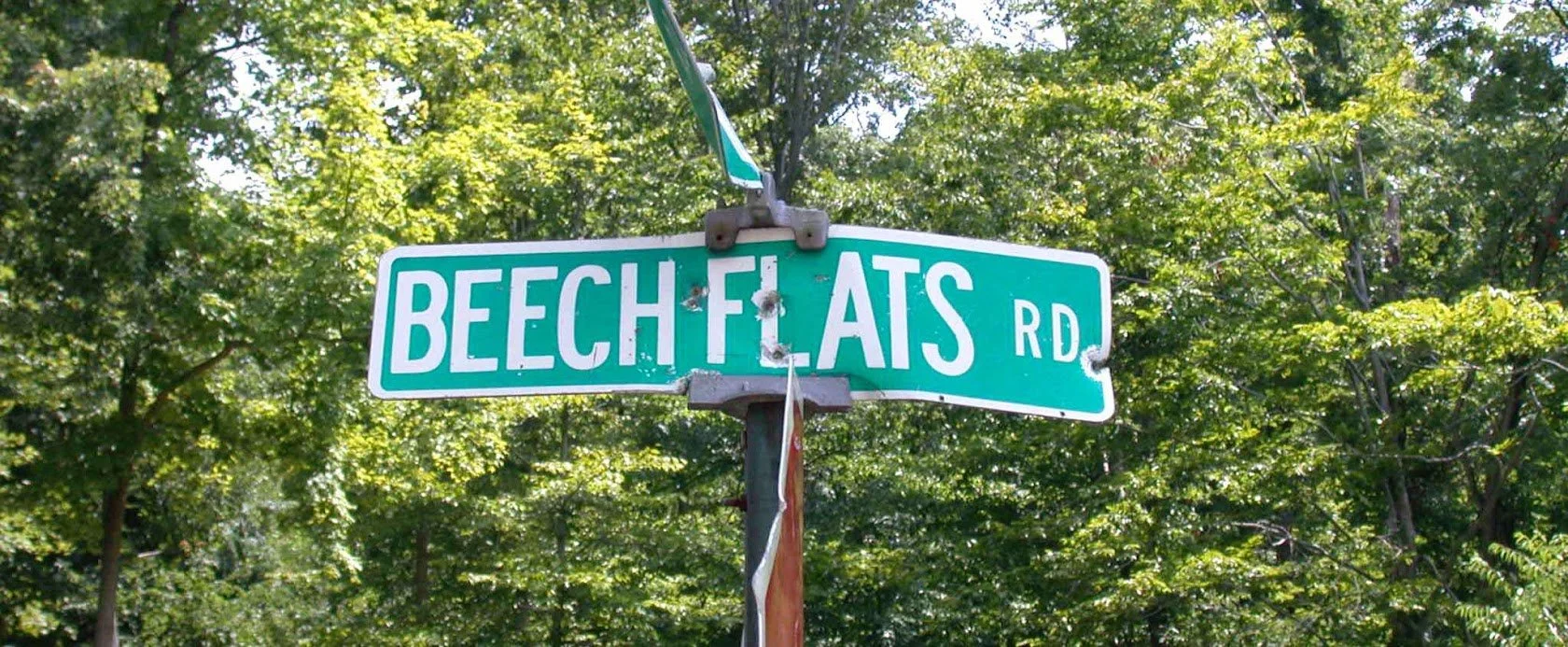
The first European settlers in this region encountered a formidable large swamp known as Beech Flats. The water-drenched soils of Beech Flats were only barely drained by Baker’s Fork, a tributary of Ohio Brush Creek that goes on to run through Fort Hill. Responsible for the swampy ground was a layer of water-impermeable clay left behind by a glacial lake a few hundred thousand years ago.
The immense forested wetlands, occupying several square miles, presented a fecund if intimidating natural feature to indigenous people and early settlers. Giant beech trees rose above the water-logged soils like luminescent ghosts. Shallow waterways crisscrossing the peaty soils were lined with marsh marigold, purple cress, and colonies of skunk cabbage. Jack in the pulpits grew nearly waist-high. Co-mingling the beech trees were towering pin oaks, swamp white oaks, and shellbark hickory trees, the latter providing nutritious nutmeats. The vernal pools that flooded the swamp forest writhed with frogs and salamanders in early spring, and even a half mile away from the swamp’s periphery, the chorus of spring peepers was deafening. Beaver, otter, and muskrat flourished. In the fall, the skies filled with tens of thousands of ducks that used the wetlands to refuel before they continued their journey southward.
Although the land resisted being drained for agriculture, it eventually did succumb. For over a century, nothing remained of Beechflats Swamp except for an acre or two of primeval shellbark hickories and swamp white oaks that still stand at Red Stone Farm, a faint whisper of the swamp’s previous glory. Although the waters of the swamp had been mostly relegated to buried drain pipes, it didn’t miss a chance to express its free nature whenever heavy rains lifted it to the surface. In the occasional rainy summer, cattails, rushes, and sedges would erupt right in the middle of an otherwise tended cow pasture, and willow-lined ditches would fill to the brim with dark waters and leopard frogs. In such years, chorus frogs would chant from soggy corners of the field that the bush hog prudently skipped. Beechflats hadn’t completely, it was just heavily suppressed.
The Baldwin Piano Legacy & the Founding of Red Stone Farm
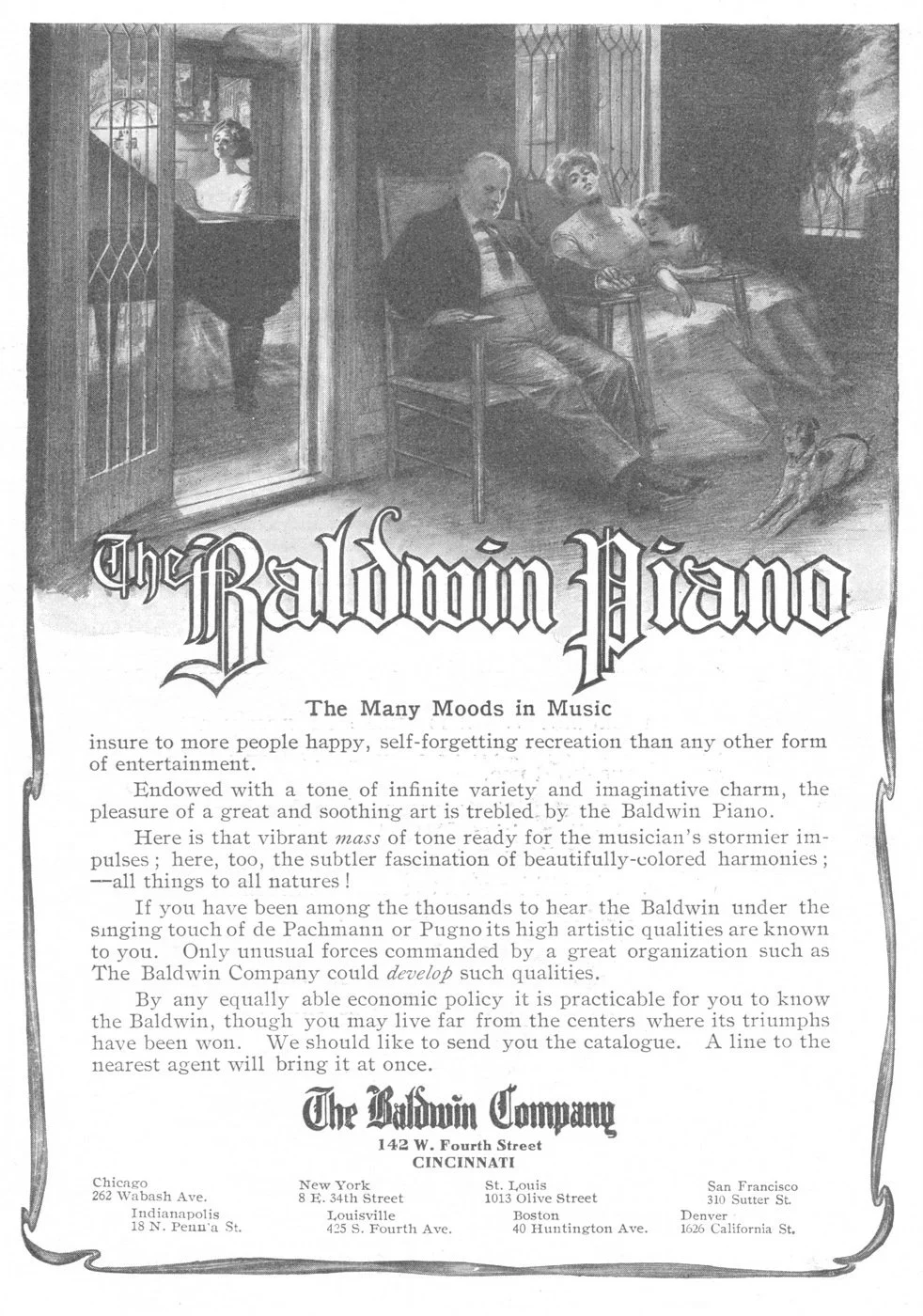
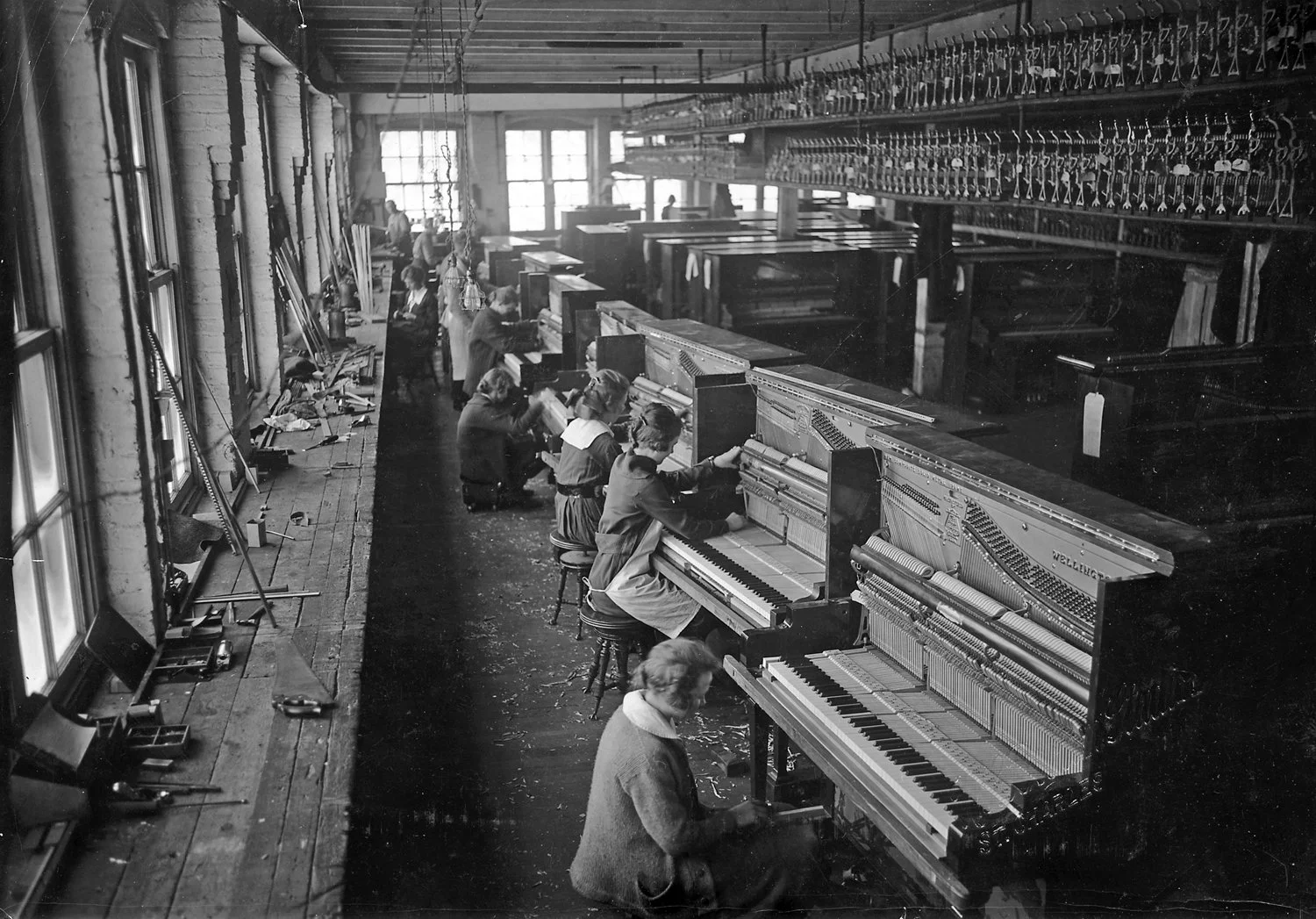
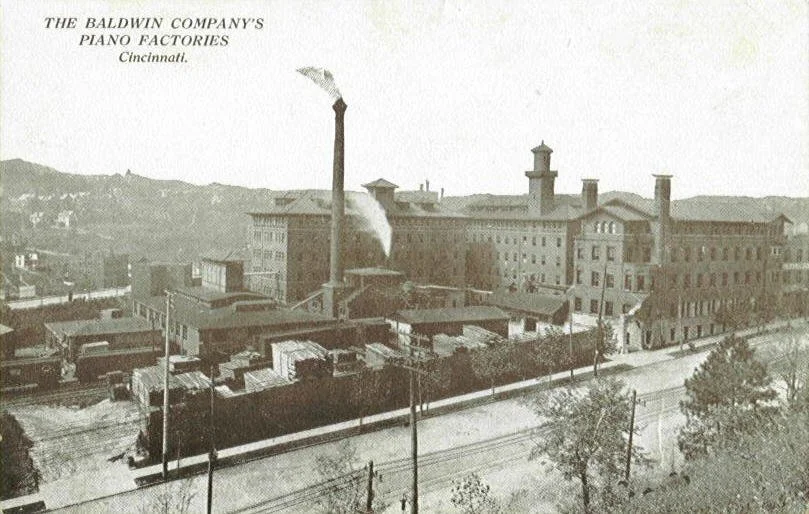
Of Red Stone Farm’s many human stories, the protagonist of our current tale is Drausin Wulsin, Farm Manager of Red Stone Farm and great-grandson of Lucien Wulsin. Lucien’s father, a highly skilled carpenter, and Lucien’s mother, both of mulatto descent, had fled to Northern Kentucky from New Orleans to escape the racial biases of the South. Lucien, one of nine children, fought in the Union Army and lived on to demonstrate unusual business acumen. In 1866, he was hired as a clerk by Dwight Hamilton Baldwin, an accomplished musician who taught lessons on the reed organ and violin. Directed by Lucien, Baldwin began to retail and eventually wholesale what became one the world’s most recognized pianos. Nearly every upper class family desired to own a piano in the eras preceding the invention of the record player, and prior to the Depression, piano sales were brisk.
Lucien became a full partner in the piano business, and after Mr. Baldwin’s death in 1899, Lucien bought out Baldwin’s shares to become full owner, eventually passing his position on to his son, Lucien Wulsin II. The business lasted through four generations, surviving the Depression and two wars before eventually closing its doors in the 1980’s. The Baldwin Piano Factory building in Cincinnati, though no longer serving its original function, still stands today as a historic icon.
Lucien Wulsin II’s son, John, was Drausin’s father. John became a prosperous surgeon in Cincinnati. Drausin fondly remembers his idyllic childhood, spent riding horses and romping in neighborhood forests in Indian Hills. John passed onto Drausin a deep love for farming and rural lifestyles, an affinity that Drausin ruefully refers to as his father’s errant gene, since it showed up only in Drausin and in none of his four siblings. Propitiously, several years before the Baldwin Company collapsed, John acted on his longing for agrarian rootedness by cashing out his Baldwin shares and buying, in stages, the 1200 acres that make up Red Stone Farm today.
First, a Green Grass Dairy, then a Grass-fed Meat Business
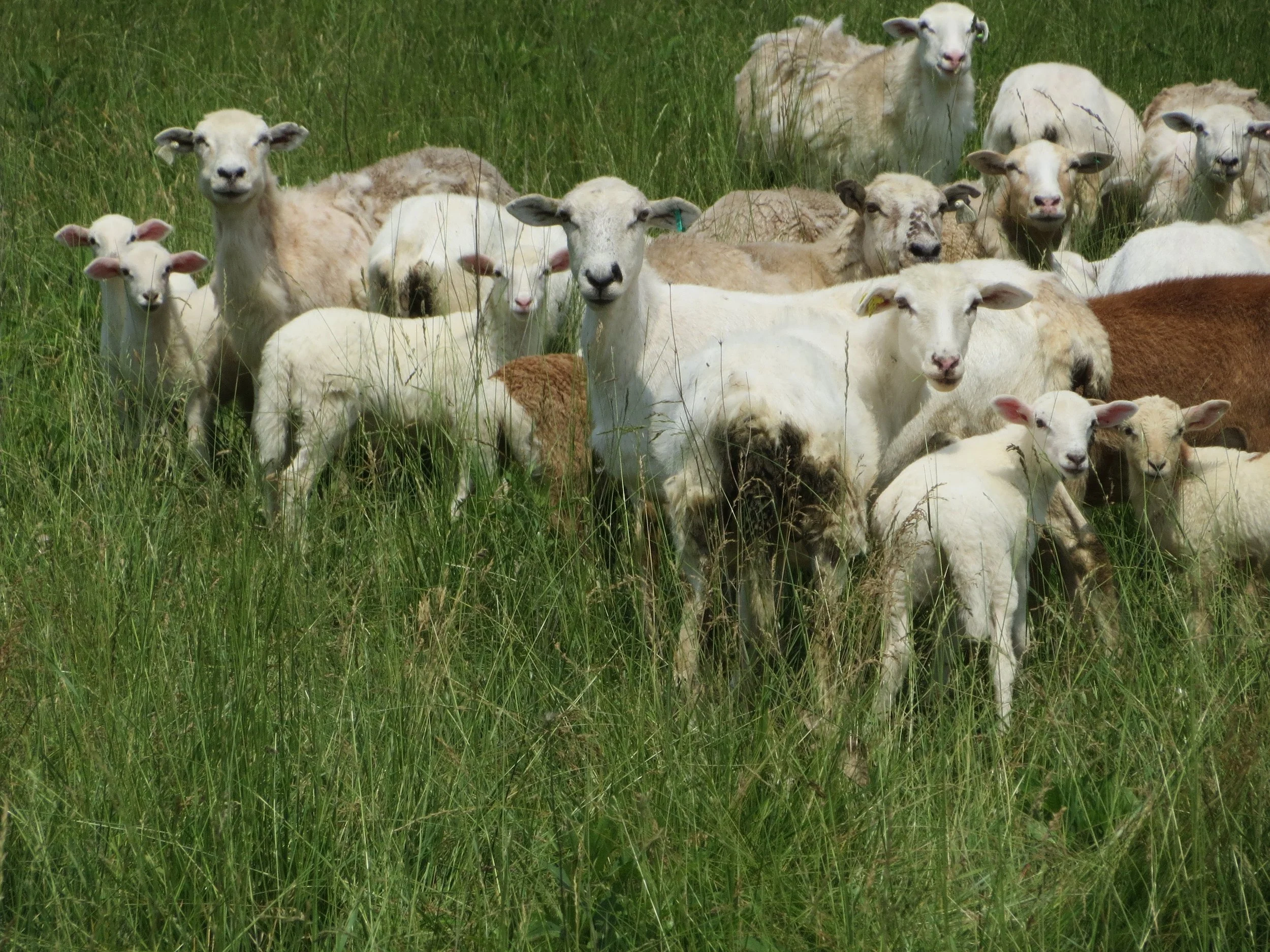
Because Drausin’s father John was inexperienced in agriculture and already more than occupied with his demanding profession, he hired local farmers to manage the land in the traditional manner - growing grain and husbanding beef cattle. This didn’t stop John and Drausin, however, from daydreaming about someday taking a more active management role. Both men had an intellectual and philosophical bent, and they spent a good deal of time reading up on farming practices that were in closer alignment with nature’s cycles, animatedly discussing the most innovative approaches. Drausin was deeply attracted to the idea of replacing all or some of the grains used in the farm’s beef production with grass. The notion, in theory, would not only improve the health of the farm’s soils but the health of the farm’s consumers.
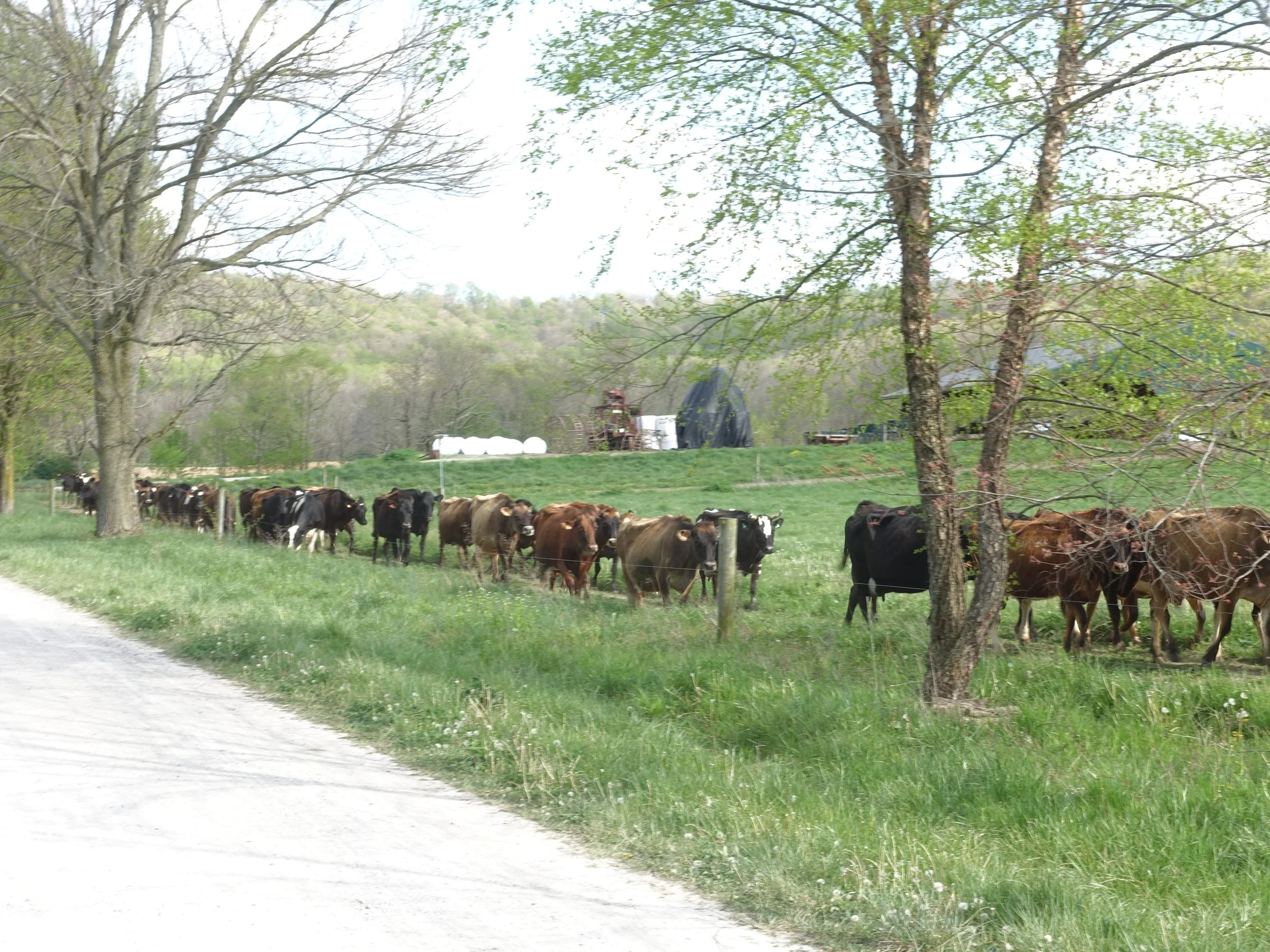
The principles behind grass farming are perhaps most best explained by Joe Salatin, a Virginia farmer and author who wrote: Folks, this Ain’t Normal, You Can Farm, and Salad Bar Beef. Joe describes himself humorously but accurately as a “libertarian environmentalist capitalist lunatic farmer.” Joe declares: “How do herbivores run in nature? Well, they group, they mob up for predator protection, and they mow. They don't eat dead cows, they don't eat chicken manure, and they don't eat grain. How can we most closely approximate this pattern? We use electric fence to manage those animals and then move the herd frequently so that at any one time most of the grass is at rest, recuperating, and we're only impacting one tiny portion of it.” In short, healthy pastures on rapid rotation grow healthy cows; healthy cows grow healthy people.
Drausin confesses to having to overcome immense emotional and financial challenges in order to transition successfully from the “white color city guy” to farmer. While living a busy life in Cincinnati and raising his family, Drausin would make pilgrimages to Red Stone Farm to restore his soul and to dream. Eventually, he succeeded in finding farmers who were willing to work toward his goal of a grass-supported dairy herd. He methodically began weaning the farm away from soybeans and corn by laying thousands of feet lines of water lines and electric fences, outfitting a milking parlor, and working toward organic milk certification. It took Drausin 20 years to turn his dream of a grass-supported organic dairy into the venture that could stand on its feet.
Drausin’s latest project, Grassroots Farm, began in 2009 with the production of grass-fed meat. Today those meats include farm-raised beef, lamb, pork, and chicken. Meats were sold directly to the buyer at the farm, as well as on weekends, at Hyde Park Farmer’s Market in Cincinnati. In those days, when asked if he is making money on the venture, Drausin rolls his eyes and sighs. He estimates it will take at least 15 years for the grass-fed meat project to become a profitable venture. It always was a labor of love, and Grassroots Farm provided a valuable service to the public by offering an alternative, and much healthier, source of meat.
Financial Worries
In the process of these businesses, Drausin had to educate himself in the nuts and bolts of farm life. He had no choice but learn the hard way, figuring out how to do everything from fixing a recalcitrant tractor to delivering a calf at 2 am in the morning in a snowstorm. Capital for the farm was a perennial issue. He HAD to somehow make the farm financially productive if he were ever to achieve his highest dreams for the farm, especially since he owned only one share of the farm among his four other siblings. It was imperative he demonstrate to his so-far patient brothers and sisters that what may sound like radical business ideas were sound and viable. From these concerns arose Drausin’s wildest and riskiest idea yet: to rein in the farm’s water resources, restore its native wetlands, and then sell off wetland mitigation credits. It was a heady, high-stakes idea. But if successful, Drausin could right his books with the income, and Beechflats Swamp could rise again.
A Risky Wetlands Mitigation Project Begins
After years of research and dauntingly tedious paperwork, in 2007 a mitigation plan was submitted and approved by the governing government agencies. In 2008, Drausin quit his banking job and committed himself full-time to the farm and the wetland restoration project. Work on the forty-acre swamp commenced, judicially surrounded by a 160-acre forest buffer for the purpose of water quality protection. The water impoundments had to be just the right height, high enough that water would stand from late winter through mid-summer, yet low enough that the swamp would dry out in August, just as a good swamp should.
Years of ecological monitoring and site improvement practices followed. Invasive plants, especially multiflora rose, were removed by the tens of thousands. Planted were 15,000 green ash, pin oak, shellbark hickories, river birch, sycamore, and swamp white oak saplings. Federal agencies praised the results, pointing to Red Stone as one of the most successful wetland restoration projects in all of Ohio. The swamp was coming back to life!
All of this, of course, cost a great deal of money. Drausin spent many a sleepless night wondering if this hair-brained idea of his was going to save the farm or be its ruin. Four dry years passed without a substantial sale of wetland credits. Finally, in 2013, a large sale came through that enabled Drausin to pay off all of his considerable development debts. Other sales followed. With a twist of iron, the wetlands mitigation project on the farm’s “back forty” became the financial pillar of the farm, making other innovative farm projects possible. The 200-acre wetlands project was protected by a permanent conservation easement held by Northern Kentucky University. In 2017, the easement was passed to a new Holder, the Arc of Appalachia.
Enrolling 236 more acres of Bottomlands
I accordingly followed our past success, and enrolled another 236 acres of bottomlands into the wetlands mitigation program, bringing total mitigation acreage to 454 acres. The newly added ground, though, presented a much stiffer challenge. In the first phase, we had nearly virgin soils and an existing native seedbank to lean on as a resource for restoration. But now we were dealing with fields that had been under tillage for 80 years and in pastoral agriculture for 10. We had to kill non-native fescue and bluegrass before planting 100,000 trees in a span of just two years.
And then there was the drain tile. It was just about everywhere, draining water from our soils. Finding the tiles so we could break them was no easy task. We started by breaking the systematically spaced plastic drain tiles my father had installed, but the water stubbornly refused to return to the surface. We then began looking for much deeper, randomly-placed clay tile buried 50 to 100 years ago. Every time we located one row of tile and broke it, water, being heavy, would sink to the next nearest dormant tile line and reactivate it, rather than rising to the surface. Finally, we found all the tiles in one section of the field and broken them. The very next morning we awoke to finally see the water visibly collecting on the soil’s surface. This was a long-term search-and-destroy mission, but in the end, it worked.
I accordingly followed our past success, and enrolled another 236 acres of bottomlands into the wetlands mitigation program, bringing total mitigation acreage to 454 acres. The newly added ground, though, presented a much stiffer challenge. In the first phase, we had nearly virgin soils and an existing native seedbank to lean on as a resource for restoration. But now we were dealing with fields that had been under tillage for 80 years and in pastoral agriculture for 10. We had to kill non-native fescue and bluegrass before planting 100,000 trees in a span of just two years.
And then there was the drain tile. It was just about everywhere, draining water from our soils. Finding the tiles so we could break them was no easy task. We started by breaking the systematically spaced plastic drain tiles my father had installed, but the water stubbornly refused to return to the surface. We then began looking for much deeper, randomly-placed clay tile buried 50 to 100 years ago. Every time we located one row of tile and broke it, water, being heavy, would sink to the next nearest dormant tile line and reactivate it, rather than rising to the surface. Finally, we found all the tiles in one section of the field and broke them. The very next morning we awoke to finally see the water visibly collecting on the soil’s surface. This was a long-term search-and-destroy mission, but in the end, it worked.
The Birth of a Wetlands Preserve
In 2026, when Drausin offered to sell the 454-acre swamp to the Arc of Appalachia for $1000/acre, one-seventh of what it would have fetched had it been drained, productive farmland, the Arc of Appalachia didn’t hesitate to respond positively. “Yes!” “Most definitely, “Yes!” It would be an honor and a privilege to care for such an astoundingly beautiful and diverse wetland. Red Stone is now one of our most highly prioritized projects on our 2026-2027 Land Campaigns.
The Arc of Appalachia and Drausin Wulsin are committed to ever-strengthening our partnership. Our hope is to someday double the preserve acreage at Red Stone Farm, creating what will one day be the largest wetlands preserve in all of southern Ohio. Who knows what might happen from there. The property is certainly a perfect educational classroom. One thing is certain: this is not the end of the story for Red Stone; it’s just the next chapter.